Products Description
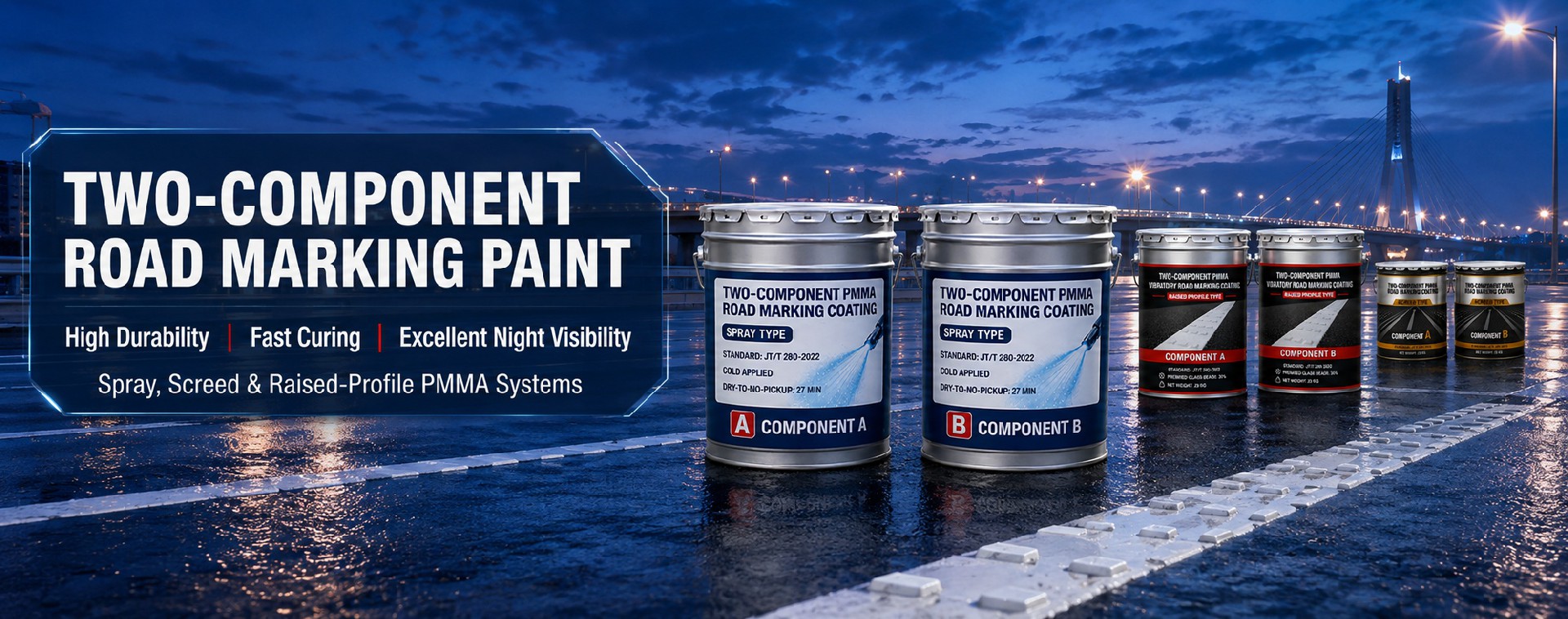
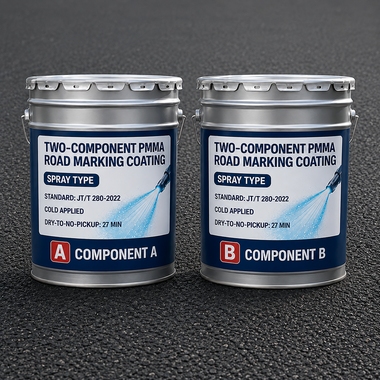
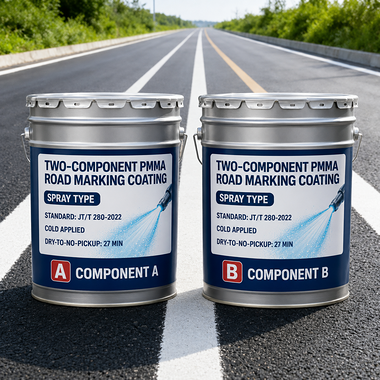
Two-Component PMMA Spray Road Marking Coating
Cold-Applied A/B System for Efficient and Durable Road Line Spraying
🛣️ Product Overview
Two-Component PMMA Spray Road Marking Coating is a chemically curing cold-plastic marking material designed for efficient application on highways, municipal roads, industrial traffic areas and parking facilities.
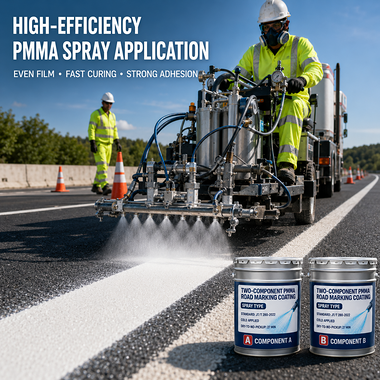
The product is supplied as a Component A and Component B system. After the components and specified initiating materials are prepared according to the batch technical instructions, dedicated two-component spray equipment meters, mixes and atomizes the materials onto the pavement.
Unlike conventional one-component paint that mainly dries through solvent evaporation, the PMMA system forms its marking film through chemical polymerization.
The low-viscosity material penetrates suitable pavement texture before curing, helping create mechanical anchoring and stable adhesion. After curing, it forms a dense marking film with balanced hardness, flexibility, wear resistance and surface cleanliness.
This page specifically describes the spray-type product. Screed-type and raised-profile two-component coatings are separate products with different formulations, equipment and application structures.
◆ Key Product Advantages
◆ Dedicated Spray-Type Formulation
The formulation is designed for use with professional two-component spray marking equipment.
Controlled atomization helps produce a smooth, even marking film and makes the product suitable for long continuous lines and large-area projects.
It must not be confused with the thicker screed-type or raised-profile versions.
✦ Chemically Cured A/B System
Components A and B react after controlled on-site mixing and form a crosslinked polymer structure.
The coating does not rely solely on physical solvent evaporation to form the finished marking.
Mixing procedure, component ratio and initiator addition must follow the technical instructions supplied with the production batch. These values should not be estimated on site.
⬢ Tested Wear Resistance
The supplied white two-component ordinary-type sample recorded an abrasion loss of 38.7 mg under the referenced test conditions, meeting the report requirement of no more than 40 mg.
Actual road service life is affected by traffic volume, heavy-vehicle loading, film thickness, pavement condition, glass bead system and construction quality.
◈ Strong Pavement Adhesion
The relatively low-viscosity material can penetrate the texture and pores of properly prepared asphalt or concrete.
The supplied sample achieved Grade 2 adhesion in the test report.
Concrete, aged pavement and weak substrates may require mechanical preparation and a compatible primer before spraying.
☀ Weather and Low-Temperature Stability
The tested sample passed water resistance, alkali resistance, artificial accelerated weathering and low-temperature crack-resistance requirements.
These results support use in a range of normal road environments, but do not mean that the coating is immune to every climate, substrate defect or application error.
✓ Low-VOC Tested Performance
The submitted sample recorded a VOC content of 2 g/kg.
This supports a factual low-VOC description for the tested formulation. Export claims should still be reviewed against the destination market’s own VOC definitions, labeling rules and test methods.
The heavy-metal results were within the limits shown in the report, but the product should not be marketed as “zero heavy metals.”
✦ Smooth and Clean Marking Surface
The spray process can produce a smooth and relatively dense marking surface when equipment pressure, nozzle selection, material temperature and application speed are properly controlled.
A dense surface can reduce dirt retention and make routine cleaning easier, but “permanent self-cleaning” should not be promised.
⚙️ Tested Technical Data
Product Type: Two-Component PMMA Spray Road Marking Coating
Curing Method: Chemical Polymerization
Application Method: Two-Component High-Pressure Spray
Referenced Standard: JT/T 280-2022
Recommended Film Thickness: 0.7 mm
Tested Density: 1.68 g/cm³
VOC Content: 2 g/kg
Gel Time: 16 min
Dry-to-No-Pickup Time: 27 min
White Covering Power: 97%
White Luminance Factor: 0.85
Abrasion Loss: 38.7 mg
Adhesion: Grade 2
Flexibility: 1 mm
Water Resistance: Passed
Alkali Resistance: Passed
Low-Temperature Crack Resistance: Passed
Artificial Accelerated Weathering: Passed
The data above are taken from the supplied test report for the submitted white ordinary-type two-component sample. Final batch specifications should be confirmed in the quotation, TDS, COA and contract.
📊 Theoretical Material Consumption
At a film thickness of 0.7 mm and tested density of 1.68 g/cm³:
Theoretical consumption: approximately 1.18 kg/m²
Calculation:
0.7 L/m² × 1.68 kg/L = 1.176 kg/m²
This theoretical value excludes:
• Surface roughness losses
• Spray overspray
• Material remaining in equipment
• Line-edge losses
• Pavement absorption
• On-site mixing and cleaning losses
Actual purchasing quantity should include a reasonable construction allowance based on equipment, road texture and operator experience.
📍 Typical Applications
Recommended applications include:
• Municipal arterial roads
• Urban express roads
• Highway service areas
• Toll station plazas
• Local and regional roads
• Airport service roads, subject to applicable specifications
• Tunnels and bridge approaches
• Industrial park traffic lanes
• Logistics and warehouse areas
• Parking facilities
• School and hospital internal roads
• Colored safety and traffic-management areas
Airport or regulated public projects must be checked against the project’s applicable specification. JT/T 280-2022 compliance alone does not automatically establish acceptance under another country’s standard.
🎨 Available Colors
Standard colors:
• White
• Yellow
Custom colors may include:
• Red
• Blue
• Green
• Project-specific safety colors
Customized colors should be approved against a color reference or physical sample before bulk production.
The supplied report covers a white sample. Test results should not automatically be applied to every customized color without technical confirmation.
🔧 Application Guidance
1. Inspect the Pavement
The pavement must be stable, clean and dry.
Remove dust, loose particles, oil, old unstable markings and standing water before spraying.
2. Prepare Weak or Aged Surfaces
Lightly sanded or weak concrete should not be sprayed directly.
Mechanically remove loose material and apply a compatible primer when required.
3. Prepare the Components
Identify Component A, Component B and any separately supplied initiator or catalyst.
Follow the batch-specific instructions for preparation, addition sequence and mixing.
Do not use an assumed mixing ratio.
4. Use Dedicated Spray Equipment
Use equipment designed to meter and mix two-component PMMA materials.
Check pumps, hoses, spray guns, nozzles and bead dispensers before starting.
5. Control the Environment
Recommended application temperature: 5–35°C.
Do not apply during rain, fog, surface condensation or when the pavement is wet.
Avoid application when relative humidity exceeds the confirmed technical limit.
6. Control Film Thickness
For this spray-type product, the recommended reference thickness is 0.7 mm.
Equipment speed, pressure, nozzle output and material flow must be coordinated to maintain an even film.
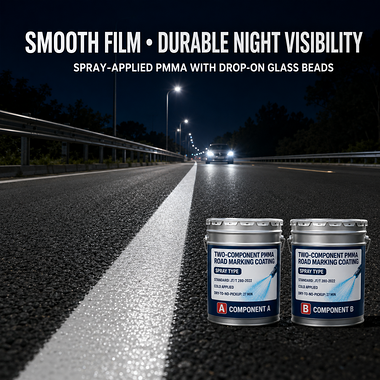
7. Apply Glass Beads
Apply compatible drop-on glass beads while the coating surface is still receptive.
Retroreflection depends on bead quality, application rate, embedment and film condition.
8. Protect the Work Area
Keep traffic away until the marking has cured and reached a non-pickup condition.
The tested sample recorded 27 minutes, but actual curing time varies with temperature, formulation, film thickness and initiator dosage.
📦 Packaging and Storage
The product is supplied as separately identified components.
Packaging should clearly distinguish:
• Component A
• Component B
• Initiator or catalyst, when separately supplied
• Color
• Batch number
• Production date
• Net weight
• Storage requirements
Store unopened containers in a cool, dry and ventilated area, protected from direct sunlight, heat sources and moisture.
Because PMMA systems contain reactive materials, storage, handling and transport must follow the product safety data sheet and applicable destination regulations.
🔍 Quality Documentation
Available documents may include:
• Technical Data Sheet
• Safety Data Sheet
• Certificate of Analysis
• Factory Batch Inspection Record
• Third-Party Test Report
• Application Instructions
• Packing List and Commercial Invoice
The supplied report covers the tested white ordinary-type sample. Buyers should confirm that the ordered formulation, color and batch correspond with the documentation provided.
❓ Frequently Asked Questions
Q1: Is this the same as screed-type PMMA coating?
No. This version is formulated for spray application and is normally applied as a thinner, smooth film.
Screed-type material is applied with different equipment and is generally selected for thicker markings.
Q2: Is this the same as raised-profile PMMA coating?
No. Raised-profile material is designed to maintain a three-dimensional warning structure.
The spray-type product is intended for smooth, efficient line application.
Q3: Must the initiating material be added before spraying?
The preparation sequence depends on the supplied A/B system.
Operators must follow the batch-specific instructions. Incorrect addition, dosage or mixing can cause incomplete curing, reduced adhesion or equipment blockage.
Q4: Can it be sprayed directly onto aged concrete?
Not without inspection and preparation.
Loose particles, laitance, contamination and weak surface material must be removed. A compatible primer may be required.
Q5: Can it be applied during humid or rainy weather?
No. Rain, condensation and excessive humidity can affect curing and adhesion.
The pavement must be clean and dry before application.
Q6: Does the product have zero VOC?
No coating should be described as zero VOC without a test supporting that exact claim.
The supplied sample recorded 2 g/kg VOC, which supports a low-VOC description for that tested formulation.
Q7: Does it contain zero heavy metals?
No. The report recorded controlled amounts of several tested elements, although all listed results met the report limits.
The correct description is “tested heavy-metal content within specified limits,” not “zero heavy metals.”
Q8: Is the initial retroreflection coefficient at least 450?
The supplied report does not include an initial retroreflection coefficient test.
A separate test report is required before publishing a specific value such as 450 mcd·lx⁻¹·m⁻².
🤝 Request a Project Quotation
Please provide:
• Required quantity
• Destination country and port
• Required color
• Project specification
• Pavement type
• Required film thickness
• Spray equipment configuration
• Glass bead requirements
• Packaging requirements
• Expected delivery date
Available support includes:
✓ Component identification and preparation guidance
✓ Spray-equipment matching recommendations
✓ Primer and glass bead supply
✓ Customized color evaluation
✓ English export packaging
✓ Technical documentation
✓ Container loading support
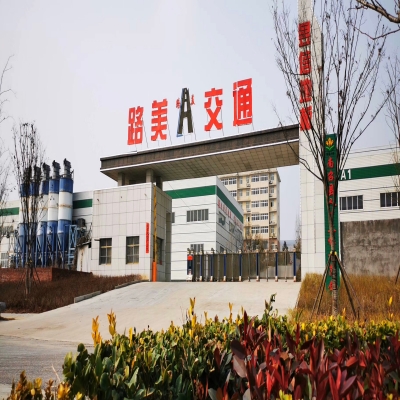
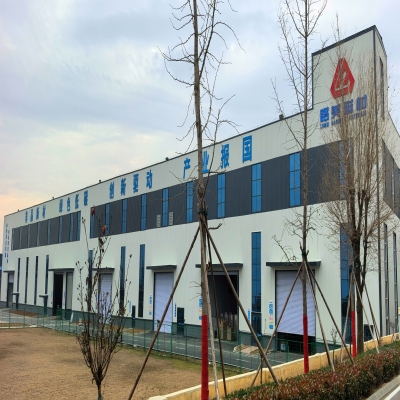
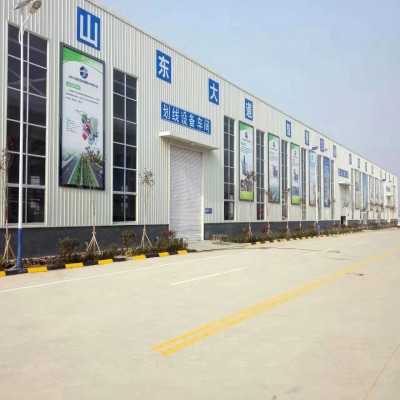
Our factory
LUMEI Road Marking···
LUMEI Road Marking···
LUMEI Road Marking···
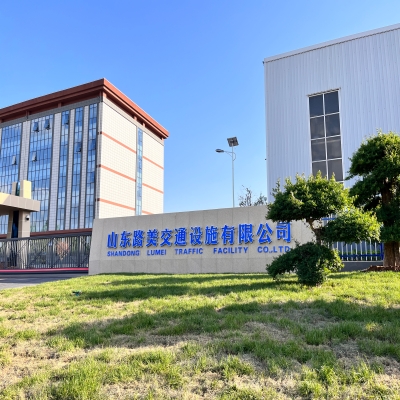
LUMEI Factory and ···
Hot Tags: two component road marking paint 2k road marking paint liquid road marking paint road marking material road line paint