1. Global Road Marking Coating Market Overall Scale & Growth Driving Factors in 2026
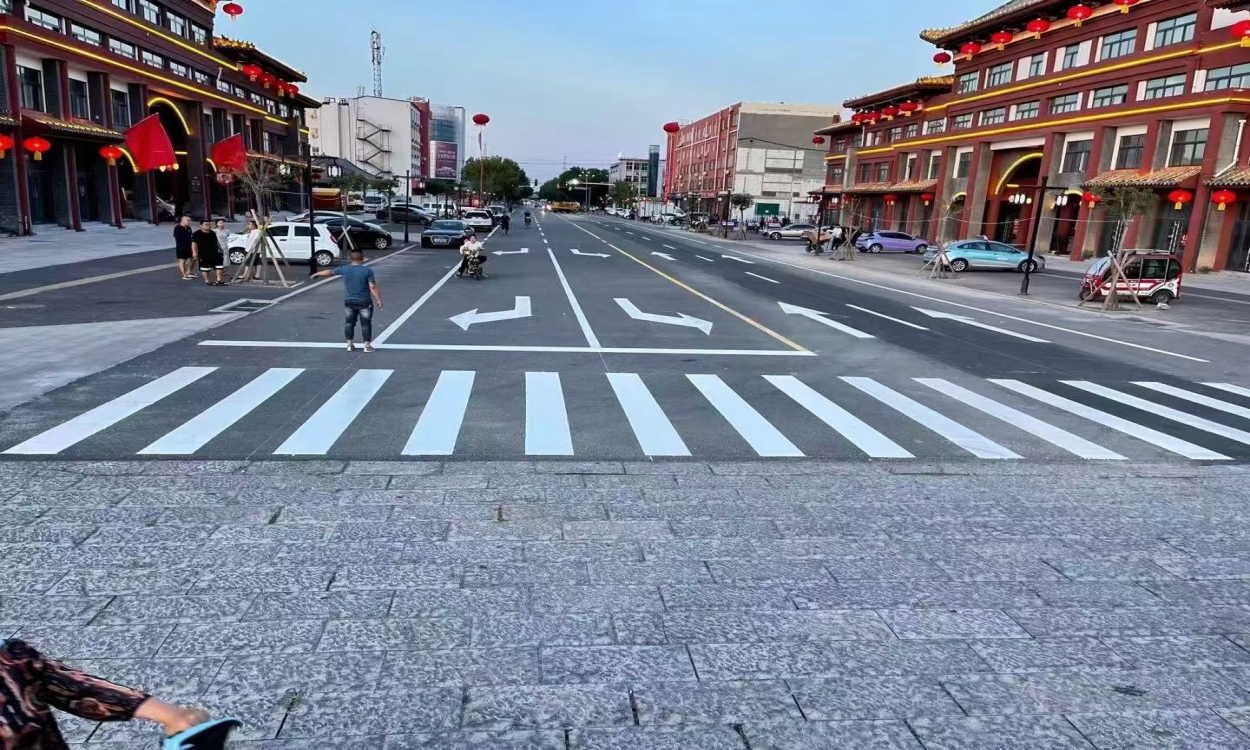
Benefiting from the continuous advancement of global highway network expansion, urban road safety renovation projects and national traffic safety governance plans, the global traffic road marking coating market maintains a stable upward growth trend in 2026. Authoritative data from Future Market Insights shows that the global road marking paint market scale reached USD 6.92 billion in 2025, and it is expected to rise to USD 7.29 billion in 2026, with a compound annual growth rate of 5.41% from 2026 to 2031, and the overall market scale will exceed USD 9.49 billion by 2031. Among all product categories, thermoplastic road marking paint occupies the largest market share of 38.11%, relying on the advantages of solvent-free formula, long service life, stable retroreflective performance and high cost performance, and has become the preferred material for highway, municipal road, airport and parking lot marking projects in most countries and regions around the world.
Multiple core factors jointly drive the continuous expansion of market demand. First, infrastructure investment plans launched by emerging economies have become the primary growth engine. The Saudi Vision 2030 in the Middle East, ASEAN highway interconnection plan, African regional road poverty alleviation transportation projects and other large-scale infrastructure plans have driven a substantial surge in the demand for road marking materials. Taking Saudi Arabia as an example, the local demand for thermoplastic road marking paint will increase from 30,000 tons in 2024 to 75,000 tons in 2030, with an average annual growth rate as high as 15%. Second, the global road safety action plan has raised the mandatory access threshold for road marking performance. More than 60 countries have issued regulatory policies to force newly built and reconstructed roads to use high-retroreflective, weather-resistant road marking materials, eliminating low-quality ordinary solvent-based coatings with short service life and poor safety performance, which further releases the market space of high-standard thermoplastic and MMA two-component cold plastic coatings. Third, the renewal cycle of old road markings in Europe, North America and other mature markets has arrived one after another. Local engineering units tend to select high-durability modified thermoplastic coatings to reduce the frequency of later maintenance and overall project comprehensive cost, bringing steady incremental demand to high-quality coating manufacturers.
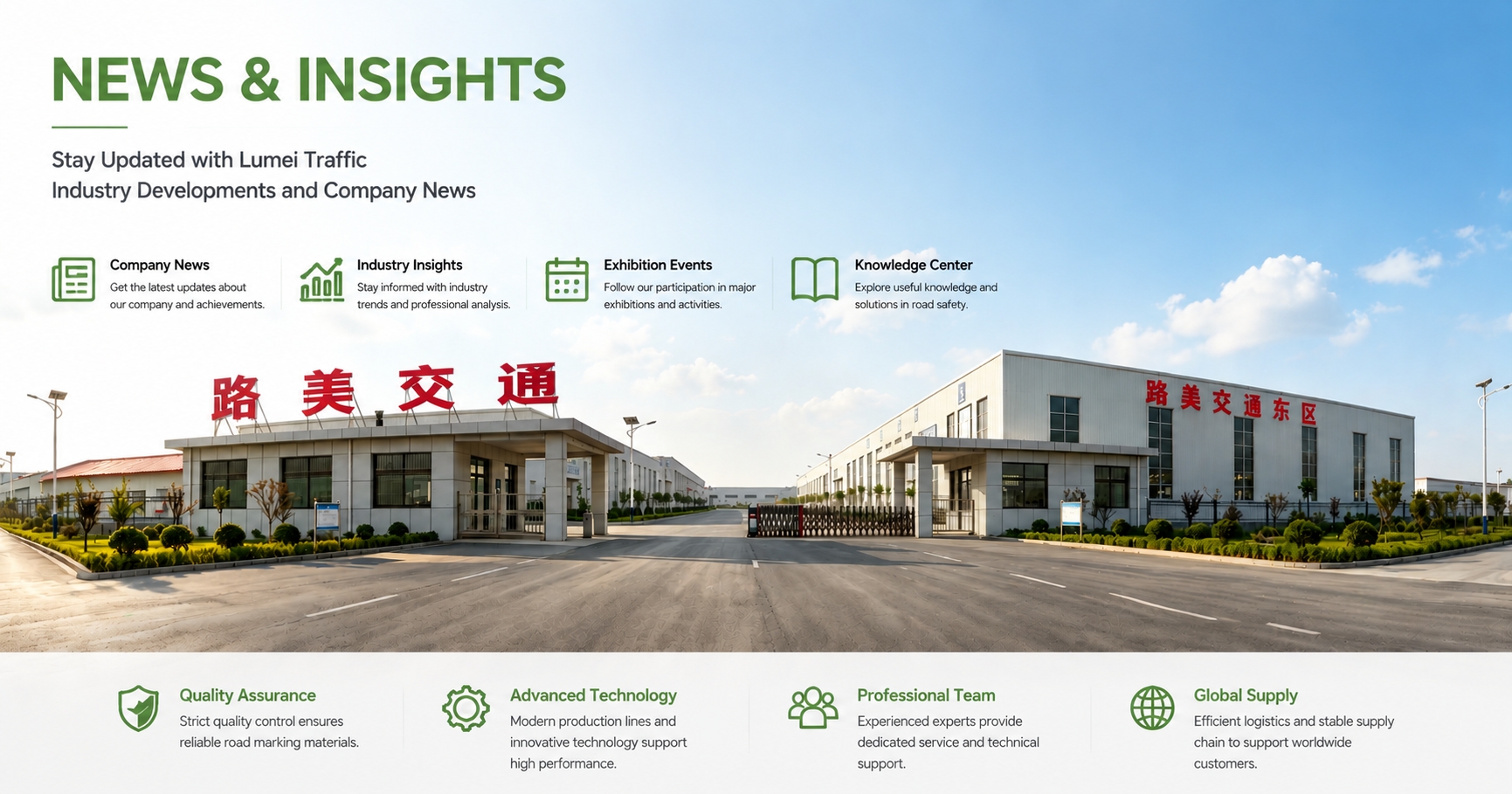
From the perspective of industrial chain layout, Shandong Province in China has formed a complete industrial cluster integrating petroleum resin, rutile titanium dioxide, mineral filler, reflective glass bead supporting raw material production, coating research and development, finished product processing and export trade, and has become the world's important supply base of thermoplastic road marking paint. In recent years, a large number of Chinese source manufacturers represented by Lumei have continuously optimized product formulas for different climatic environments and international standard requirements, breaking the long-term monopoly of European and American brands in the high-end road marking material market, and relying on stable quality, flexible customized services and efficient bulk delivery capacity to become the preferred cooperative suppliers for global engineering contractors and regional bulk importers.
2. Demand Characteristics & Procurement Pain Points of Four Core Export Regional Markets
Combined with the export order data of Chinese road marking material manufacturers in the past three years, Southeast Asia, the Middle East, Africa and Latin America have become the four core emerging demand markets for Chinese thermoplastic road marking paint exports. There are obvious differences in climate environment, bidding standards, pavement types and procurement demands in various regions, which also puts forward targeted formula customization and qualification supporting requirements for global suppliers.
2.1 Southeast Asian Market: High Humidity & Heavy Rainfall, Prefer JT/T280-2022 Standard Low Temperature Crack Resistant Coatings
Southeast Asian countries represented by Vietnam, Thailand, the Philippines and Malaysia have a tropical monsoon climate, with high annual rainfall, air humidity often exceeding 80%, and alternating hot and rainy seasons. Local asphalt and cement roads are prone to high humidity and water immersion, so road marking coatings must have excellent early water resistance, anti-blistering performance and low-temperature toughness to avoid marking peeling, bubbling and cracking caused by seasonal temperature alternation and rainwater erosion. Most national road bidding standards in Southeast Asia directly refer to China's JT/T280-2022 industry specification, which greatly reduces the qualification adaptation cost of Chinese manufacturers' products entering the local market. At present, the mainstream procurement demand in the Southeast Asian market is concentrated in ordinary flat thermoplastic paint, vibrating anti-skid marking paint and water-based environmental cold paint. Most regional importers tend to cooperate with Chinese manufacturers with complete factory qualifications, supporting English version test reports and neutral export packaging, and the order form is mainly 20GP full container bulk procurement and multi-variety mixed container delivery.
2.2 Middle Eastern Market: Strong UV & High Temperature, High Softening Point Anti-Thermal Flow Formula Is Mandatory
Countries such as Saudi Arabia, the United Arab Emirates and Oman in the Middle East have typical desert climates, with annual strong ultraviolet radiation, summer road surface temperature as high as 60℃, and local highway traffic is dominated by heavy-duty trucks, which puts forward three core hard requirements for road marking coatings: high softening point heat resistance, anti-ultraviolet aging and high wear resistance. Ordinary standard thermoplastic paint with a resin softening point of 100℃~105℃ is easy to soften, flow and deform under high temperature pavement, resulting in marking deformation, blurred lines and rapid wear. Therefore, local bidding documents clearly require that the softening point of hot melt coating shall not be lower than 115℃, rutile anti-ultraviolet titanium dioxide must be used as raw material, and the premixed glass bead content shall not be less than 20% to ensure that the marking can maintain stable whiteness and retroreflective performance for more than 3 years under strong sunlight exposure. In addition, most Middle Eastern projects require suppliers to provide CE certification, ISO management system certification and HALAL certification documents, and manufacturers need to provide full-process third-party physical and chemical inspection reports for each batch of products for customs clearance and project filing.
2.3 African Market: Low Budget & Complex Pavement, Balancing Cost Performance & Pavement Adhesion
The African market represented by South Africa, Egypt, Kenya and Nigeria has the fastest market growth rate, with an annual demand growth rate maintained at more than 12%. Affected by infrastructure budget constraints, local purchasers pay more attention to the cost performance of products, but due to the early construction of roads, most pavement surfaces are aging, loose and dusty, and the coating must have strong pavement adhesion to avoid large-area peeling and falling off within a short time after construction. Therefore, when supplying the African market, manufacturers need to match high-permeability asphalt and cement road special primer while optimizing the coating filler gradation to improve the fitting degree between the coating and the rough pavement. At the same time, most African countries adopt British BS3262 road marking standards, which have strict restrictions on the skid resistance and salt spray corrosion resistance of coatings. Chinese manufacturers need to appropriately adjust the formula wear-resistant filler ratio to meet the local bidding testing requirements.
2.4 Latin American Market: Follow American AASHTO Standards, Prefer Long-Term Framework Bulk Supply
Brazil, Mexico and other Latin American countries adopt the AASHTO M249 thermoplastic road marking material standard and AASHTO M247 reflective glass bead testing specification, which has strict requirements on the low-temperature resistance, rapid curing performance and retroreflective retention rate of coatings, and the minimum initial retroreflective coefficient of white road marking is required to reach 150 mcd/(m²·lx). Local large engineering companies and regional building material distributors mostly adopt annual framework procurement mode, preferring to sign long-term supply agreements with manufacturers with stable production capacity and complete qualification documents to lock raw material costs and avoid the price fluctuation risk brought by international crude oil and resin raw material fluctuations. The demand for MMA two-component high-performance road marking paint in high-standard airport and port projects in the region is growing rapidly, which has become a new profit growth point for Chinese high-end coating export manufacturers.
3. Interpretation of Global Mainstream Road Marking Material Standards & Manufacturer Adaptation Suggestions
At present, there are three mainstream international standard systems for global road marking coatings, namely European EN1871, American AASHTO series standards and Chinese JT/T280-2022 standard. Different regional bidding projects have clear standard compliance requirements, which is also the core threshold for Chinese manufacturers to enter the local market for bulk supply. Many small trading companies and small factories often fail in supplier qualification review because they cannot adjust the formula according to international standard parameters and provide corresponding third-party test reports, which is also the core pain point for most overseas purchasers to select Chinese suppliers.
The EN1871 standard implemented in European Union countries and Commonwealth regions focuses on environmental protection, skid resistance and weather resistance of coatings, requiring VOC emission to be lower than 50g/L, road marking skid resistance BPN value not less than 65, and the coating can resist alternating corrosion of rainwater, road deicing agent and salt spray. When supplying the European market, manufacturers need to optimize the resin and plasticizer formula to reduce volatile harmful substances, and match high-roundness, high-refractive-index glass beads that meet EN1424 standards to ensure the long-term stability of retroreflective performance. The AASHTO M249 standard in North America has strict limits on the high-temperature thermal deformation and low-temperature embrittlement resistance of coatings, requiring the coating to maintain stable physical properties in the temperature range of -40℃~60℃, and the premixed glass bead content needs to be increased to about 30% to meet the long-term wear-resistant reflective requirements of heavy-duty highways. The JT/T280-2022 standard revised and implemented in China in 2022 has been adopted by most Southeast Asian, Central Asian and African countries as the reference bidding standard, which optimizes the testing indicators of vibrating marking solid content, early water resistance and low-temperature tensile crack resistance, and puts forward clear mandatory requirements for the premixed and surface-spread double-layer matching scheme of reflective glass beads, which also provides a mature standard formula basis for Chinese manufacturers to develop emerging market businesses.
As a professional thermoplastic road marking paint manufacturer from Shandong, Lumei can adjust product formulas in a targeted way according to the standard requirements of different regional bidding projects, and provide CMA third-party full-item test reports conforming to EN1871, AASHTO M249, JT/T280-2022 and other specifications, together with ISO9001, ISO14001, CE, HALAL and other complete qualification documents, helping overseas buyers smoothly complete supplier filing, customs clearance and project bidding review.
4. Five Major Technical Development Trends of Global Road Marking Coatings Industry in the Next Five Years
Combined with the policy orientation of global road safety governance, environmental protection supervision and the iterative upgrading of construction technology, the road marking coating industry will show five major technical development trends in the next five years, which also points out the R&D and product layout direction for Chinese export-oriented road marking material manufacturers.
4.1 High Weather Resistant Modified Customized Formulas Become The Core Competitive Barrier
With the gradual saturation of the conventional standard thermoplastic paint market, homogeneous price competition is increasingly fierce. Manufacturers with independent R&D capabilities will take high weather-resistant customized formulas as the core competitive advantage, and develop targeted anti-high-temperature flow, low-temperature anti-cracking, anti-ultraviolet aging and high-wear modified coatings for extreme climatic regions such as high temperature desert, alpine plateau, coastal high humidity and rainy areas, to meet the differentiated procurement needs of high-standard projects and avoid low-end price competition.
4.2 Low-VOC Environmentally Friendly Coatings Will Gradually Replace Traditional Solvent Products
With the continuous tightening of environmental protection supervision in various countries, water-based road marking paint, solvent-free MMA two-component cold plastic coating and other low-VOC green environmental protection products will achieve rapid market penetration. Especially in Europe, Singapore, Hong Kong and other regions with strict environmental access thresholds, solvent-based road marking coatings have been gradually restricted from market access, and environmental protection performance indicators will become one of the mandatory review contents of supplier qualification in future bidding projects.
4.3 Vibrating Anti-Slip & Rainy Night High-Visibility Marking Materials Will Achieve Steady Demand Growth
In order to reduce the traffic accident rate at intersections, ramp dangerous sections and school roads, governments of various countries have successively issued policies to popularize vibrating anti-collision thermoplastic marking. This type of marking can remind drivers to slow down through tire vibration and friction sound, and the high three-dimensional structure cooperates with high-refractive-index glass beads to realize stable reflection under rainy night water film conditions. The market demand for vibrating special thermoplastic paint will maintain an annual growth rate of more than 8%, becoming an important incremental product line for manufacturers' export business.
4.4 Integrated Supply of Marking Materials + Supporting Auxiliaries + Construction Equipment Will Become The Mainstream Procurement Mode
More and more overseas general contractors and regional bulk importers tend to select one-stop suppliers with integrated supply capacity of coatings, reflective glass beads, special pavement primer and road marking construction equipment, so as to reduce the communication cost of multi-supplier docking, unify product quality standards and facilitate the unified sorting of customs clearance documents. Source manufacturers with complete industrial chain layout will have obvious competitive advantages in future bidding procurement.
4.5 Private Label OEM Customization Service Has Become An Important Profit Growth Point
Local regional distributors and independent brand operators in many emerging markets hope to build their own local road marking material brands through OEM private label packaging. Neutral export packaging, customized label design, formula fine-tuning and other OEM supporting services have become important value-added services for Chinese manufacturers to lock long-term high-quality customers, and will become an indispensable core business layout for export-oriented factories in the future.
5. Lumei's Global Market Layout & Supply Service Advantages
As a professional thermoplastic road marking paint manufacturer with more than 28 years of R&D, production and global export experience, Lumei has always taken adapting to the differentiated demand of global regional markets and meeting international standard bidding compliance requirements as the core R&D and service orientation. Relying on the complete upstream raw material supply chain advantage of Shandong traffic coating industrial cluster, the factory has built four major product series: standard thermoplastic coating, high weather-resistant modified thermoplastic coating, vibrating special anti-slip marking coating and MMA two-component high-performance cold plastic coating, which can fully cover the procurement demands of different climatic environments, international standard specifications and project budget levels in Southeast Asia, the Middle East, Africa, Latin America and other global core export markets.
In terms of technical service support, we provide one-stop supporting services including pre-order formula customization scheme recommendation, bidding qualification document sorting, construction parameter technical manual compilation, remote video construction technical training and after-sales on-line fault troubleshooting for all bulk export customers. For large-scale national highway framework procurement projects, we can also arrange professional technical engineers to go overseas to provide on-site construction guidance, process inspection and project acceptance assistance, effectively helping overseas customers avoid quality risks and rework losses caused by improper material selection and non-standard construction.
In terms of supply capacity and logistics delivery, our daily output of thermoplastic road marking paint is stably maintained at 220 tons to 280 tons, which can undertake multiple full-container bulk orders at the same time. We support FOB Qingdao, FOB Tianjin, CFR, CIF and other mainstream international trade delivery terms, with a conventional delivery cycle of 7-10 working days for in-stock standard products and 12-18 working days for OEM customized formula products. We provide standardized pallet packaging and container loading fixed protection schemes to ensure that the products can be safely transported to all ports around the world after long-distance sea transportation.
Industry News Conclusion
From the overall market trend in 2026, the global road marking coating industry is still in a steady growth cycle driven by infrastructure investment and road safety policy supervision. Emerging markets such as Southeast Asia, the Middle East and Africa will remain the core growth engine of global demand, and product formula customization, international standard compliance, one-stop industrial chain supply and professional global technical service will become the four core hard strengths for Chinese road marking paint manufacturers to compete in the global market.
In the future, Lumei will continue to increase the R&D investment of high weather-resistant, environmental protection and high-performance road marking materials, deeply layout the global emerging infrastructure market, rely on stable product quality, complete qualification system and professional full-cycle export service capacity, and strive to become the most trusted Chinese thermoplastic road marking paint manufacturer for global engineering contractors and regional bulk importers, and contribute high-quality Chinese manufacturing solutions to the construction of global safe transportation infrastructure.