Driven by global infrastructure renovation, highway expansion, urban traffic safety upgrading and the United Nations Global Road Safety Action Plan, the global road marking paint market maintains steady upward growth in 2026. According to authoritative industry research data, the total market scale of global road marking coatings reached USD 5.504 billion in 2025, and it is expected to rise to USD 5.82 billion in 2026, with a compound annual growth rate of 4.8% in the next decade.
From the perspective of product market share, thermoplastic road marking paint still occupies the leading position in the global market with a share of 36%, relying on mature construction technology, stable cost performance and complete international certification systems, and is widely used in municipal roads, rural highways, parking lots and other scenarios in most developing countries. Benefiting from the demand for long-life traffic facilities in high-grade highways, coastal corrosive areas and high-temperature and large temperature difference regions, the market share of MMA two-component cold plastic road marking paint has increased year by year, with an annual growth rate of 5.82%, becoming the fastest-growing high-performance segmentation product in the industry. In addition, water-based low-VOC environmentally friendly road marking coatings are gradually popularized in Europe, North America and other regions with strict environmental protection policies, forming a diversified market competition pattern of three mainstream material systems.
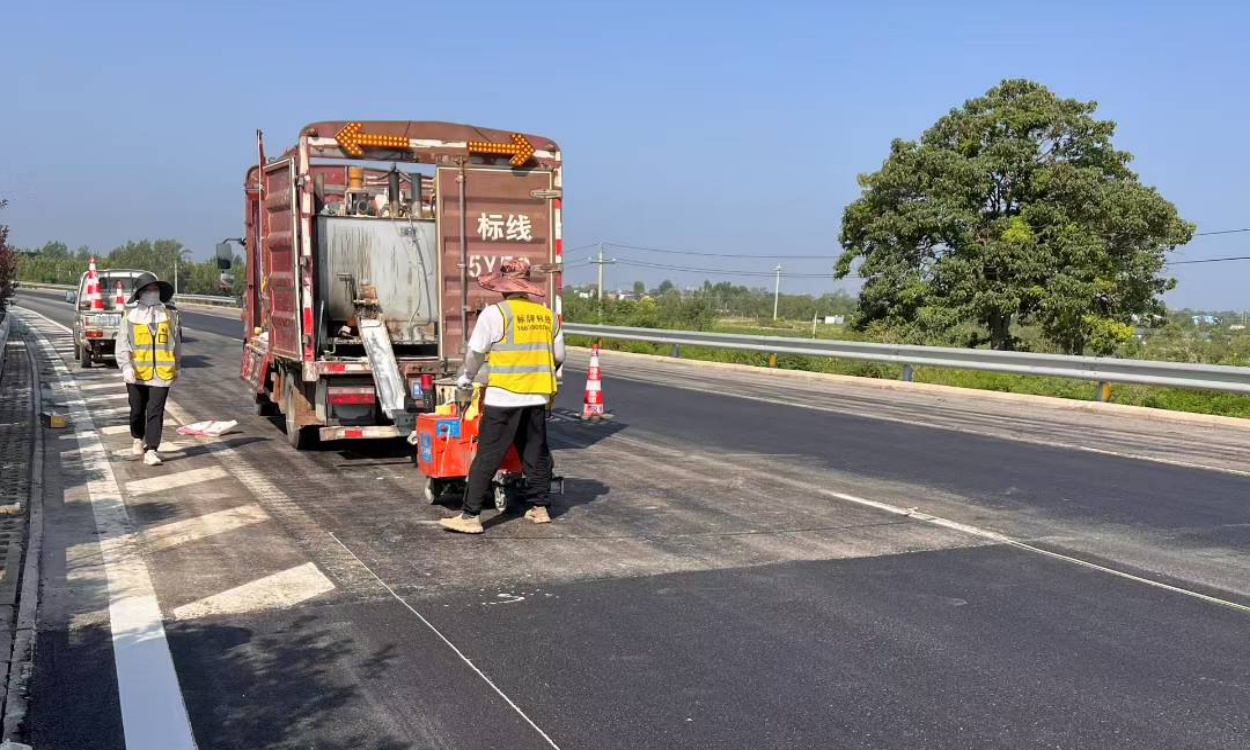
In terms of regional market distribution, the Asia-Pacific region remains the largest consumption market of global road marking materials, accounting for 40.4% of the global market share, supported by large-scale highway construction projects in India, Southeast Asia and China. The Middle East and Africa, Latin America have become emerging high-growth markets. With the continuous advancement of local road network construction and road safety governance policies, a large number of old road marking renovation and new road construction projects have been released, bringing long-term bulk procurement demand for local engineering contractors and building material distributors. Europe and North America focus on stock road maintenance and environmental upgrading, with high requirements for product durability, retroreflection performance and environmental indicators, forming a high-end segmented market dominated by long-life two-component and water-based coatings.
Mainstream Demand Characteristics of Road Marking Materials in Major Global Regions
1. Southeast Asia: High Temperature & Rainy Climate Favors Modified Thermoplastic Coatings
Countries such as Vietnam, the Philippines, Indonesia and Malaysia are located in tropical monsoon climate zones, with year-round high temperature, high humidity and frequent seasonal rainfall. Ordinary standard thermoplastic road marking paint is prone to problems such as high-temperature softening, blistering, fading and poor adhesion after construction. Therefore, local buyers prefer high-temperature resistant, moisture-proof modified thermoplastic road marking paint with pre-mixed glass bead content of more than 20% in line with international standards.
Most municipal and parking lot projects adopt hot-melt construction technology, and buyers often put forward one-stop procurement demands: purchasing thermoplastic paint together with hand-held road marking machines, pre-coated glass beads and road primer to reduce multi-supplier communication and logistics costs. At the same time, Southeast Asian importers have strong demand for OEM private label packaging, hoping to print their own brand logos on packaging bags to build local competitive barriers.
2. Middle East & Central Asia: Extreme Temperature Climate Boosts Demand for High Weather Resistance Materials
Countries in the Middle East such as Saudi Arabia, the United Arab Emirates, and Central Asian countries represented by Kazakhstan and Uzbekistan have typical continental desert climates, with strong ultraviolet radiation, summer surface temperature exceeding 60℃, and huge temperature difference between day and night in winter. Local highway bidding projects have put forward strict requirements on the softening point, low-temperature crack resistance and anti-aging performance of road marking materials.
In addition to high-temperature modified thermoplastic coatings, long-life MMA two-component road marking paint is widely used in local expressways, tunnels and airport roads. Local engineering purchasers pay the most attention to complete third-party test reports, ISO factory certification and full set of customs clearance documents, and tend to sign long-term framework supply agreements with Chinese source manufacturers with stable large-scale production capacity to avoid quality risks caused by small-batch irregular suppliers.
3. Africa & Latin America: Cost-Effective Standard Thermoplastic Paint Is the Main Procurement Choice
In emerging infrastructure markets such as Nigeria, Kenya, Peru and Colombia, local road construction is dominated by national rural highway safety upgrading and urban branch road renovation projects. Buyers give priority to cost-effective standard international thermoplastic road marking paint, with moderate requirements for product service life, and pay more attention to whether the supplier can provide stable bulk delivery and flexible MOQ terms to adapt to the phased progress of local small and medium-sized projects.
Most African ports accept FOB Qingdao, FOB Shanghai delivery terms, and importers often choose full-container consolidated shipments to reduce unit logistics costs. Many local building material traders will purchase road marking paint, marking equipment and glass beads in one container at the same time, which puts forward higher requirements for the one-stop supporting supply capacity of Chinese manufacturers.
4. Europe & North America: Environmental Compliance + High Retroreflective Performance Become Hard Threshold
Driven by carbon neutrality and atmospheric governance policies, European and American countries have strictly restricted the VOC content of solvent-based coatings. Water-based environmentally friendly road marking paint and low-VOC modified thermoplastic paint have become the preferred bidding materials. At the same time, local traffic management departments have formulated unified high retroreflection standards, requiring the night retroreflection coefficient of road markings to be higher than 150 mcd/m²/lux, forcing importers to cooperate with formal manufacturers with complete environmental test reports and high-standard product inspection capabilities.
Three Major Development Trends of Global Road Marking Material Industry in 2026
Trend 1: Low-VOC Environmental Protection Has Become the Basic Access Standard for Global Export
With the continuous tightening of environmental protection laws and regulations in various countries, high-VOC solvent-based road marking coatings have been gradually restricted from entering urban road bidding projects in developed regions. Whether it is thermoplastic, two-component or water-based road marking paint, exporters must provide formal VOC, heavy metal and other environmental test reports to complete local customs clearance and project filing.
Chinese source factories with complete environmental protection production qualifications and automated closed production lines will occupy greater export advantages. Many small and medium-sized processing factories without environmental approval are gradually excluded from the global export market, and overseas orders are continuously concentrated to large-scale standardized manufacturers with complete qualification systems.
Trend 2: Long-Life High-Performance Two-Component Coatings Accelerate Market Penetration
Global governments have extended the maintenance cycle of high-grade roads to control comprehensive traffic operation costs, and the market demand for road marking materials with a service life of more than 3 years has exploded rapidly. MMA two-component road marking paint forms a dense cross-linked film through chemical curing, which can resist ultraviolet aging, salt fog corrosion and frequent wheel rolling, and is especially suitable for high-traffic expressways, port freight terminals and coastal corrosive road sections. Industry data predicts that the global two-component road marking coating market will exceed USD 2.4 billion by 2030, bringing new incremental opportunities for Chinese export manufacturers.
Trend 3: One-Stop Supporting Supply + OEM Customization Becomes Core Competitive Advantage
Overseas importers no longer simply purchase a single road marking paint product, but prefer suppliers that can provide coatings, construction equipment, reflective glass beads, special primers and other full-range supporting materials. One-stop procurement can effectively save multi-party docking time, unify product quality standards and reduce overall logistics costs. At the same time, OEM private label packaging, formula customized adjustment according to regional climate, and English technical construction guidance have become essential value-added services for foreign trade manufacturers to retain long-term customers.
How Overseas Importers Choose Reliable Chinese Road Marking Material Source Manufacturers
Faced with numerous domestic coating export suppliers, many overseas buyers are prone to encounter problems such as unstable batch quality, incomplete customs clearance documents, delayed delivery and lack of after-sales technical support. Combining years of global export service experience, Lumei summarizes four core screening criteria for overseas purchasers:First, verify the factory's formal production qualifications, ISO quality system certification, environmental protection filing documents and third-party CMA full-item test reports of each batch of products to ensure that the materials meet the international standards of the destination country and smoothly pass project bidding and customs clearance inspection.Second, confirm the manufacturer's large-scale stable production capacity, understand the daily output of the production line and overseas bulk order delivery experience, and avoid cooperating with small workshops with insufficient capacity to cause order delay risks.Third, confirm whether the supplier supports OEM private label customization, flexible MOQ and multiple international trade settlement methods, and can provide full sets of export documents such as commercial invoices, packing lists, certificates of origin and bill of lading.Fourth, inspect the supplier's overseas project technical service capacity, including providing English construction operation manuals, remote video construction guidance, and targeted formula optimization according to local high temperature, humidity, low temperature and other climatic conditions to avoid mass quality failures caused by inappropriate material selection.
As a professional Chinese source factory for road marking materials, Lumei has 28 years of R&D, production and foreign trade export experience, with multiple automated environmentally friendly production lines. We can supply standard and modified thermoplastic road marking paint, scratch coating and spray type MMA two-component road marking paint, oscillating road marking special coating, supporting full series of road marking machines, hot melt kettles, high refractive index reflective glass beads and road special primer. We support global OEM packaging customization, provide complete English qualification documents and test reports, and deliver goods from FOB Qingdao, FOB Tianjin and other mainstream ports to more than 60 countries and regions around the world. Our professional foreign trade technical team provides free whole-process construction technical guidance for all bulk overseas orders to help global customers avoid various construction quality risks caused by climatic and process factors.
Conclusion
Against the background of the continuous advancement of global road safety governance and infrastructure upgrading, the road marking material industry has ushered in a differentiated and standardized new stage of development. Thermoplastic coatings will still occupy the basic market share of global road marking demand, while environmentally friendly water-based coatings and long-life two-component high-performance coatings will become the core growth track of future industry exports.
Overseas engineering contractors and building material distributors should combine the local climate characteristics, road traffic grade, environmental protection access threshold and project budget to select matching road marking materials and formal Chinese source manufacturers with complete qualifications and stable supply capacity. In the future, Lumei will continue to optimize regional customized product formulas, improve one-stop supporting supply and global foreign trade service capabilities, and provide safe, cost-effective and standardized road marking overall solutions for global infrastructure construction partners.