Products Description
Thermoplastic Raised Profile Road Marking Paint
Vibratory Rumble Strip Material for Speed Reduction and Hazard Warning
🛣️ Product Overview
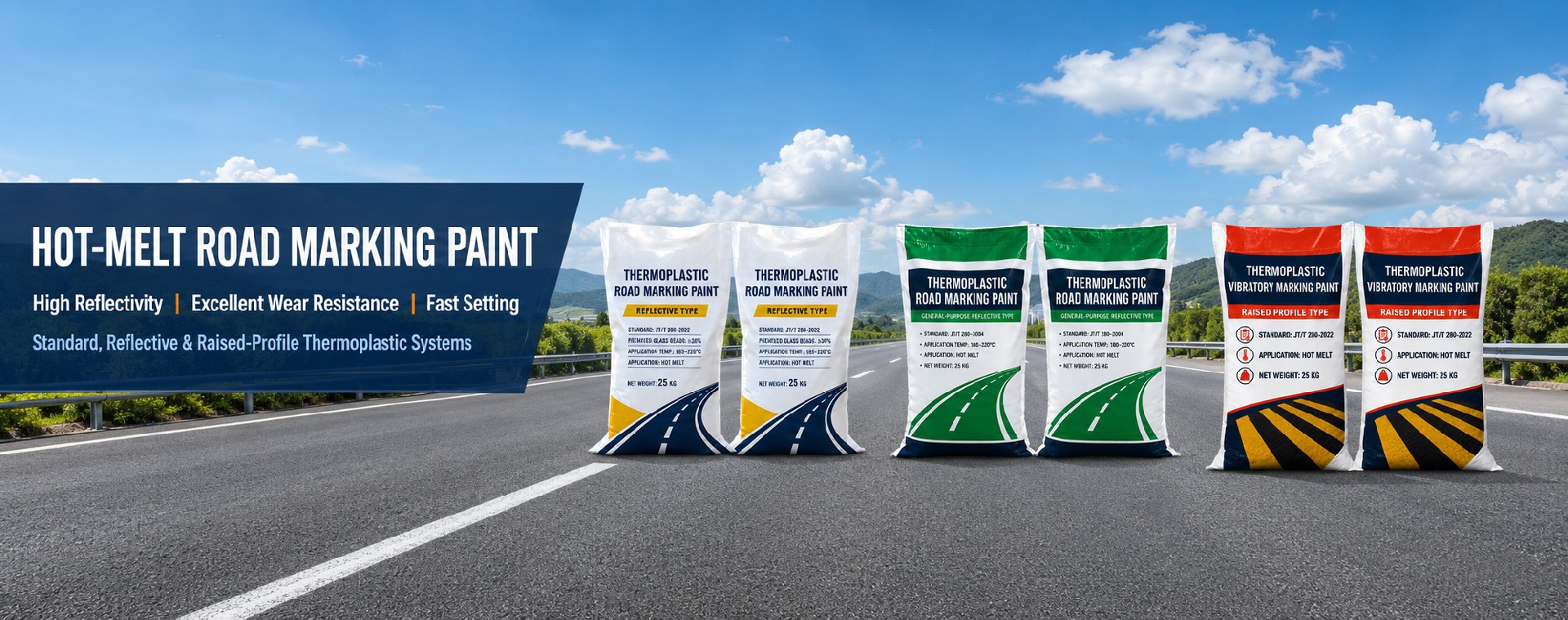
Thermoplastic Raised Profile Road Marking Paint, also known as thermoplastic vibratory marking paint, is a functional hot-applied pavement marking material designed for speed reduction, driver warning and hazardous-road guidance.
Unlike conventional flat road markings, this material is applied in repeated raised bars, ribs, dots or other profiled patterns. When vehicle tires pass over the raised structure, the contact produces a noticeable vibration and audible warning that reminds drivers to reduce speed and pay attention to changing road conditions.
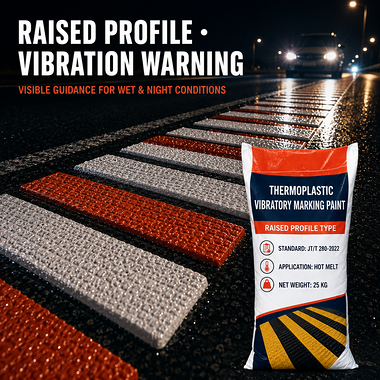
The raised surface can also improve marking texture and skid resistance. When reflective glass beads are correctly selected and applied, the marking provides visible guidance under vehicle headlights.
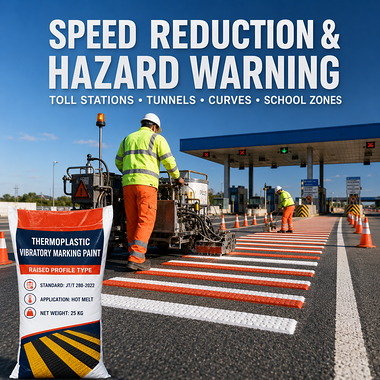
This product is suitable for toll station approaches, tunnel entrances, sharp curves, steep slopes, school zones and other locations where visual markings alone may not provide sufficient warning.
White and yellow are the standard colors. Orange-red and other project-specific colors can be customized according to road design requirements.
◆ Key Product Advantages
◆ Raised Vibration Warning
The marking forms a repeated raised profile above the pavement surface.
When vehicles travel over the marking, tire contact with the raised structure produces physical vibration and audible feedback. This gives drivers an additional warning beyond normal visual road markings.
The intensity of the warning depends on profile height, spacing, pattern design, vehicle speed and road conditions.
✦ Visible Guidance at Night
The material can be used with suitable premixed and drop-on reflective glass beads.
Correctly applied surface beads reflect vehicle headlights and improve the visibility of the warning marking at night.
Retroreflective performance depends on glass bead quality, application rate, embedment, marking color, surface condition and construction quality.
The product should not be described as guaranteeing visibility beneath deep standing water. Project-specific wet-night requirements must be confirmed separately.
⬢ Textured Anti-Slip Surface
The profiled structure creates a more textured surface than conventional flat thermoplastic markings.
This can improve tire contact and provide useful warning performance on approaches to hazardous sections. Actual skid resistance depends on the profile design, aggregate system, surface contamination and wear condition.
Where a project specifies a minimum skid-resistance value, the required test method and target should be confirmed before production.
⚠ Speed Reduction and Hazard Warning
Raised profile markings combine visual, tactile and audible warnings.
They are particularly useful before locations where drivers need to slow down, change lanes or prepare for a hazardous road condition.
Typical warning locations include toll stations, tunnel entrances, intersections, sharp bends, steep slopes and pedestrian-sensitive areas.
◈ Wear and Compression Resistance
The thermoplastic resin and aggregate system forms a hard, cohesive marking after cooling.
The formulation is designed to withstand repeated vehicle loading and normal road-service conditions. Performance is affected by traffic volume, heavy-vehicle frequency, profile dimensions, pavement quality and installation control.
✓ Fast Cooling After Application
The material is heated and applied with suitable thermoplastic road marking equipment.
After application, it cools and hardens relatively quickly, helping contractors shorten lane-closure time.
Traffic should only be reopened after the marking has cooled completely and passed an on-site inspection.
⚙️ General Product Specifications
Product Name: Thermoplastic Raised Profile Road Marking Paint
Alternative Name: Thermoplastic Vibratory Road Marking Paint
Product Type: Hot-Applied Profiled Pavement Marking Material
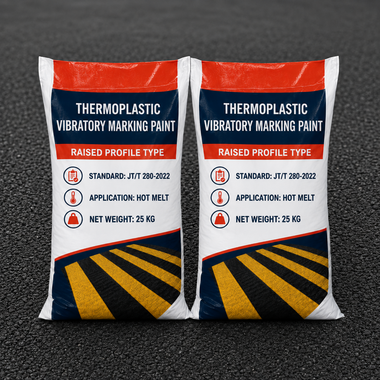
Featured Standard: JT/T 280-2022
Application Method: Hot Melt
Profile Type: Raised Bars, Ribs, Dots or Customized Patterns
Standard Colors: White and Yellow
Optional Colors: Orange Red, Blue, Red, Green, Grey and Black
Suitable Surfaces: Asphalt and Properly Prepared Concrete
Reflective System: Compatible Premixed and Drop-On Glass Beads
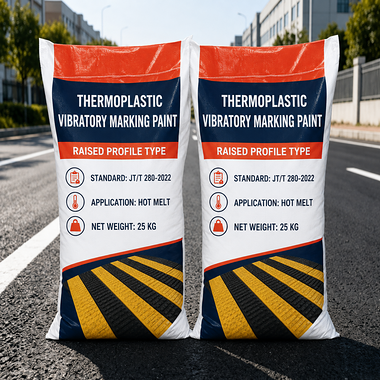
Standard Packaging: 25 kg Moisture-Resistant Woven Bag
OEM and Private Label: Available
The final formulation, heating temperature, profile dimensions and test indicators should be confirmed in the project-specific technical data sheet and sales contract.
📍 Typical Applications
Thermoplastic raised profile marking paint can be used in the following locations:
• Expressway speed-reduction zones
• Highway toll station approaches
• Tunnel entrances and exits
• Sharp curves and steep slopes
• Accident-prone road sections
• Urban intersections
• School and hospital zones
• Pedestrian crossing approaches
• Bridge approaches
• Construction diversion areas
• Port and logistics traffic lanes
• Industrial roads with heavy vehicles
The profile pattern and spacing should be designed according to the required warning intensity, vehicle speed and applicable road-design specification.
🔶 Available Profile Patterns
Different raised structures can be produced through appropriate marking equipment and application control.
Available pattern concepts include:
• Parallel raised bars
• Repeated transverse ribs
• Raised dots or blocks
• Intermittent profiled lines
• Customized warning patterns
The finished marking shape is determined mainly by application equipment, template design, material viscosity, operating temperature and construction speed.
Buyers should provide engineering drawings or required profile dimensions when requesting a customized solution.
🎨 Available Colors
Standard Colors
• White
• Medium Yellow
• Deep Yellow
Optional Project Colors
• Orange Red
• Red
• Blue
• Green
• Grey
• Black
Customized color matching is available subject to a confirmed color reference, order quantity and technical feasibility.
Color appearance may vary under different lighting and pavement conditions. For projects with strict color requirements, a sample should be approved before bulk production.
🔧 Application Guidance
1. Inspect the Pavement
The pavement must be structurally sound, clean and dry.
Remove dust, mud, oil, loose particles, standing water and other contaminants before application.
2. Use Primer When Necessary
A compatible primer may be required on concrete, aged asphalt or surfaces with insufficient adhesion.
The primer should reach the required condition before the thermoplastic material is applied.
3. Heat With Continuous Agitation
Heat the material gradually in suitable thermoplastic preheating equipment.
Continuous agitation is necessary to maintain a uniform mixture and prevent local overheating.
The final operating temperature must follow the confirmed technical data sheet. Excessive or prolonged heating may affect color, resin performance and application consistency.
4. Control the Raised Profile
Use suitable profiled-marking equipment, dies or templates to produce the required raised structure.
Profile height, width, spacing and shape should follow the approved engineering drawing.
5. Apply Reflective Glass Beads
Where nighttime retroreflection is required, compatible drop-on glass beads should be applied while the marking surface remains molten.
The bead application rate and embedment must be controlled to achieve stable initial reflection.
6. Allow the Marking to Cool
Protect the application area until the marking has cooled, hardened and passed an on-site inspection.
Do not reopen the lane solely according to a fixed time, because cooling is affected by marking thickness, pavement temperature and weather.
📦 Packaging and Storage
Standard packaging is 25 kg per moisture-resistant woven bag.
Store the product in a dry and ventilated warehouse. Protect it from rainfall, direct sunlight, ground moisture and damaged packaging.
Keep bags sealed until use. Moisture-contaminated or agglomerated material should be inspected before being placed in heating equipment.
Export packaging options include:
• Standard English packaging
• Neutral packaging
• Private-label packaging
• Customized shipping marks
• Palletized loading
• Non-palletized container loading
Final loading quantity depends on packaging, pallets, container limits and destination requirements.
🔍 Quality Control and Documentation
Production batches are checked according to the factory quality-control process.
Available documents may include:
• Technical Data Sheet
• Certificate of Analysis
• Factory Inspection Certificate
• Batch Quality Record
• Available Third-Party Test Report
• Packing List and Commercial Invoice
• Export Documentation Support
JT/T 280-2022 is a Chinese transport industry standard. Overseas buyers should send their applicable local standard, tender document or required test indicators before ordering.
Our technical team can compare the requested requirements with the available formulation and recommend an appropriate product configuration.
🌍 Export Customization
The product can be evaluated and customized according to:
• Destination country
• Local climate
• Road surface type
• Vehicle speed
• Traffic volume
• Heavy-vehicle percentage
• Required warning intensity
• Raised profile dimensions
• Required color
• Reflective requirements
• Packaging and labeling requirements
Sample evaluation or a trial order is recommended before large-volume project supply.
❓ Frequently Asked Questions
Q1: What is thermoplastic vibratory road marking paint?
It is a hot-applied thermoplastic material used to create raised road-marking profiles.
When vehicle tires pass over the raised pattern, the structure produces vibration and sound that warn drivers to reduce speed or pay attention to a hazardous road section.
Q2: Is it the same as ordinary thermoplastic road marking paint?
No. Ordinary thermoplastic paint is generally applied as a flat line.
Vibratory marking material is used with specialized equipment or templates to form raised ribs, bars or other profiles. Its formulation and application consistency must be suitable for maintaining the required shape.
Q3: Can it be used in rainy conditions?
The textured raised structure can provide additional tactile warning on wet pavement, while suitable reflective beads can support visibility under headlights.
Actual wet-condition performance depends on drainage, water depth, surface cleanliness, glass bead system and installation quality.
Q4: Can the raised pattern be customized?
Yes. Profile shape, height, width and spacing can be designed according to the project drawing and available application equipment.
Technical confirmation is required before production.
Q5: What colors are available?
White and yellow are standard colors.
Orange-red, red, blue, green, grey and black can be evaluated for customized orders.
Q6: How long does the marking last?
Service life depends on traffic volume, heavy-vehicle loading, profile height, marking thickness, road condition, climate and construction quality.
A general one-to-three-year range may be used only as a reference, not as a fixed guarantee.
Q7: Can it be applied on concrete?
Yes, provided the concrete is properly cured, clean, dry and prepared.
A compatible primer is normally recommended to improve adhesion.
Q8: What information is required for a quotation?
Please provide:
• Required quantity
• Destination country and port
• Required color
• Profile drawing or dimensions
• Road surface type
• Traffic and climate conditions
• Applicable standard
• Packaging requirements
• Expected delivery date
🤝 Request a Project Quotation
Contact our export team for product recommendations, samples, technical documents and factory quotations.
Please send your required quantity, color, destination port, road conditions and raised-profile drawing.
We can provide:
✓ Factory-direct supply
✓ Customized profile solutions
✓ White, yellow and special colors
✓ English export packaging
✓ OEM and private-label service
✓ Reflective glass beads and primer
✓ Application guidance
✓ Container loading support
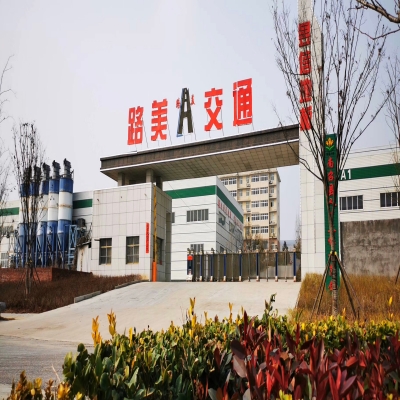
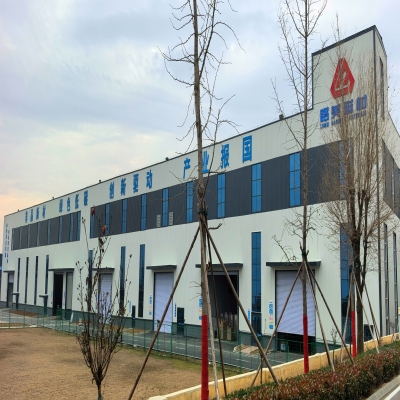
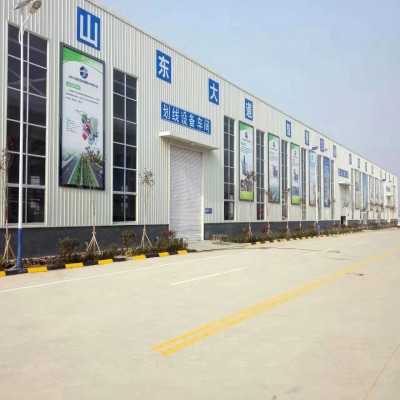
Our factory
LUMEI Road Marking···
LUMEI Road Marking···
LUMEI Road Marking···
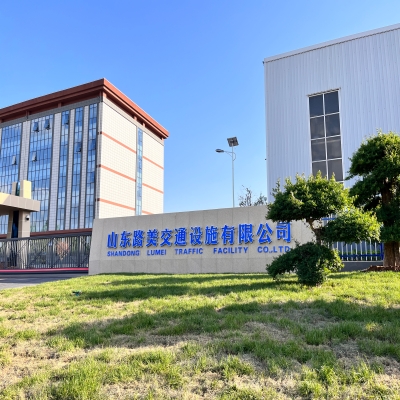
LUMEI Factory and ···
Hot Tags: vibrating road marking paint rumble strip paint thermoplastic protruding paint anti-skid road marking paint high friction road marking paint