
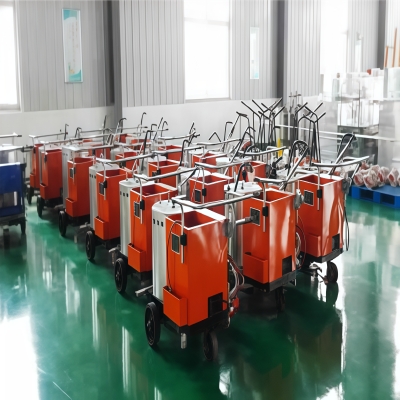
Finished Road Marking Equipment Inspection
Shandong Lumei Traffic Facilities Co., Ltd. uses a finished equipment inspection area to review assembled road marking machines before packaging and dispatch.
This stage connects the completed machine with the confirmed order. The inspection should address the selected model, installed components, relevant operating functions and items included in the supply.
For buyers, the important question is which checks apply to the equipment they are purchasing and how the results will be recorded.
Check the Configuration Against the Order
Before functional checks, the machine configuration should be compared with the agreed specification.
Relevant items may include:
Machine model and identification
Engine or power supply configuration
Heating or paint delivery system
Application and adjustment components
Glass bead dispenser, where specified
Included tools, accessories and spare parts
Labels and approved brand markings
Optional features should be identified clearly. Photographs can help document the supplied configuration, but they do not replace functional inspection.
Different Machines Require Different Checks
Thermoplastic Preheaters and Melting Kettles
Inspection may address the vessel assembly, heating components, stirring mechanism, controls and material discharge arrangement, as applicable to the model.
Any heating trial should follow the equipment’s operating procedure and agreed test conditions. Temperature control and other measured results should be interpreted within those conditions.
Hand-Push Thermoplastic Marking Machines
Relevant checks may include wheel movement, operating handles, material outlet adjustment, heating components and glass bead dispensing equipment.
When paired with thermoplastic road marking paint, material compatibility and the proposed application settings should also be confirmed.
Cold-Paint Spraying Machines
Checks may cover the pump, hoses, connections, spray controls and spray pattern where an operating trial is arranged.
A spray trial should identify the test medium and conditions. Results obtained with one medium should not be assumed to represent every paint formulation.
Distinguish Basic Checks from Application Trials
Assembly inspection, a no-load run and an actual marking trial provide different information.
A basic inspection can identify configuration or assembly issues. An application trial can provide further information about operation with the selected material under stated conditions.
Buyers requiring a demonstration, extended operating test or specific acceptance measurement should agree on the scope before ordering. Factory checks do not replace any separately required third-party inspection or destination-market conformity assessment.
Inspection Records and Issue Follow-Up
The purchase agreement should identify which inspection records are required and whether photographs or videos form part of the review.
Useful records connect the machine identification with its configuration, inspection date, test conditions and findings. Where an issue is identified, the affected item should be reviewed and any necessary recheck completed before release.
These records can also support later technical communication. They do not guarantee that equipment will remain fault-free under every operating or maintenance condition.
Final Preparation for Dispatch
After the agreed checks, shipment preparation should confirm the machine, accessories and documents against the packing list.
Packaging should protect the equipment during handling and transport. Any fuel, batteries or other regulated items require review before shipping.
Buyers can explore our road marking product range when planning equipment and material purchases together.
Discuss Your Inspection Requirements
Contact LUMEI with the machine type, configuration, quantity and destination.
Tell us which inspection records, demonstrations or buyer-appointed checks you need so these arrangements can be discussed before production and dispatch.