
Products Description
Standard Drop-on Glass Beads for Road Marking
🔷 Product Overview
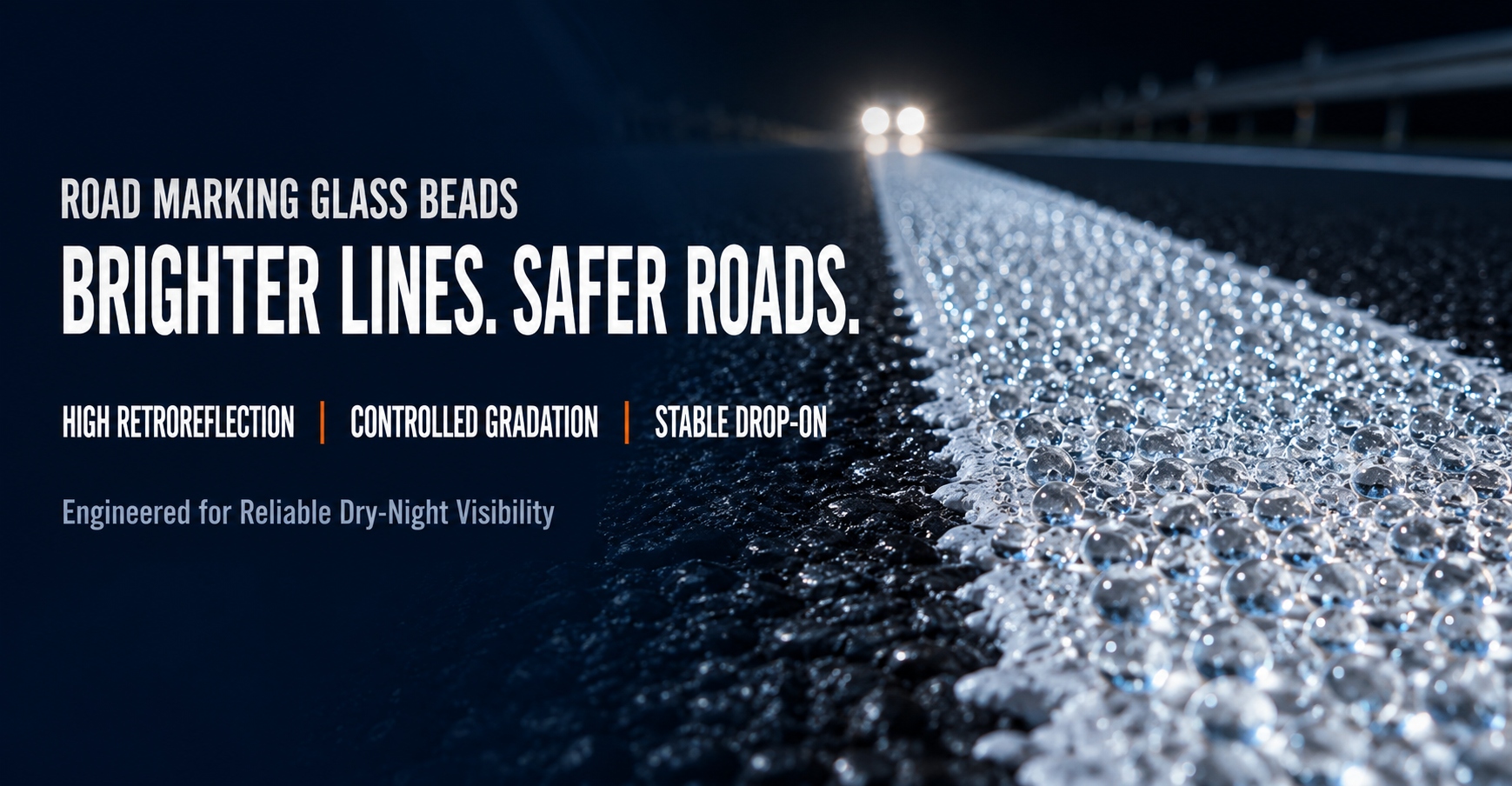
Standard Drop-on Glass Beads are transparent spherical glass particles designed to provide immediate retroreflection for newly applied road markings. They are dispensed uniformly onto the surface of fresh thermoplastic, acrylic, water-based or two-component marking materials before the coating hardens.
When vehicle headlights strike properly embedded glass beads, light enters the bead, is refracted and reflected back toward the driver. This improves the nighttime visibility of road lines, directional markings, pedestrian crossings and other traffic markings.
This standard drop-on grade has a controlled particle size distribution from 106 to 850 μm. Laboratory testing shows a general roundness of 85%, while the 600–850 μm fraction reaches a roundness of 99%. The product is supplied with moisture-resistant surface treatment to support stable storage and smooth mechanical dispensing.
✨ Main Product Advantages
🔘 Controlled Particle Size Distribution
The combination of different particle sizes helps the beads distribute evenly across fresh marking material. Larger particles contribute to effective light exposure, while medium and smaller particles improve surface coverage.
The tested particle size distribution is:
600–850 μm: 21.3%
300–600 μm: 66.9%
106–300 μm: 11.8%
Above 850 μm: 0%
Below 106 μm: 0%
💡 Reliable Dry-Night Retroreflection
The glass beads provide immediate retroreflective performance when correctly applied to fresh road marking material. The tested refractive index is between 1.5011 and 1.6580, making the product suitable for standard reflective road marking applications.
Actual retroreflectivity is also affected by the marking material, bead application rate, particle distribution, embedding depth, road condition and construction quality.
⚪ High Spherical Particle Content
The tested overall roundness is 85%. The roundness of the 600–850 μm fraction reaches 99%.
A consistent spherical shape allows light to enter and return more effectively. It also supports more uniform flow through mechanical bead dispensers during road marking construction.
💧 Moisture-Resistant Surface Treatment
The product is supplied with a moisture-resistant coating. The tested sample showed no interruption during the funnel-flow test.
This treatment helps reduce caking during storage and supports stable bead flow under normal construction conditions. Bags should still be kept sealed and protected from rain, moisture and direct contact with the ground.
🧪 Controlled Physical Properties
The tested density is 2.42 g/cm³. Magnetic particle content was measured at 0%.
The glass beads are colorless, white or light yellow, with a clean surface and no obvious visible impurities. Under magnification, the particles appear as transparent spheres without obvious internal bubbles or contaminants.
🛡️ Controlled Heavy-Metal Content
The tested sample recorded:
Lead: 15 mg/kg
Arsenic: 36 mg/kg
Antimony: 9 mg/kg
All three results comply with the limit specified in the referenced GB/T 24722-2020 test report.
🛣️ Recommended Applications
Standard Drop-on Glass Beads can be used for:
Urban road lane markings
Highway and secondary road markings
Pedestrian crossings
Directional arrows and symbols
Parking lot line striping
Factory and warehouse traffic markings
Thermoplastic road marking paint
Cold-applied acrylic traffic paint
Water-based road marking paint
Two-component road marking materials
The suitability of a specific bead gradation should be confirmed according to the wet-film thickness, marking material, application equipment and project specification.
⚙️ Application Method
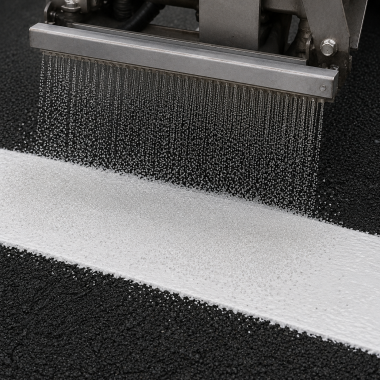
Glass beads should be dropped or mechanically sprayed onto the road marking immediately after the marking material is applied and while its surface is still wet or molten.
For consistent reflection and adhesion, the following points should be controlled:
1. Uniform Distribution
The bead dispenser should provide stable and even coverage across the entire width of the marking. Uneven application can create dark areas and inconsistent nighttime visibility.
2. Correct Embedding Depth
The beads should be partially embedded in the marking material.
If the beads remain too shallow, they may detach prematurely under traffic. If they sink too deeply, insufficient bead surface will remain exposed to receive and return vehicle headlight illumination.
3. Suitable Application Rate
The application rate should be determined through construction trials according to the type of road marking material, film thickness, bead gradation, target retroreflectivity and project requirements.
A single fixed application rate should not be used for every marking system without verification.
4. Clean and Dry Construction Conditions
The marking material, dispenser and glass beads should be protected from water, oil, dust and contamination. Damp or contaminated beads may cause poor flow, uneven distribution and reduced adhesion.
🔬 Technical Data
Product Type: Standard drop-on glass beads
Reference Standard: GB/T 24722-2020
Particle Size Range: 106–850 μm
Overall Roundness: 85%
Roundness of 600–850 μm Fraction: 99%
Density: 2.42 g/cm³
Refractive Index: 1.5011 ≤ RI < 1.6580
Magnetic Particle Content: 0%
Moisture Resistance: Qualified
Surface Treatment: Moisture-resistant coating
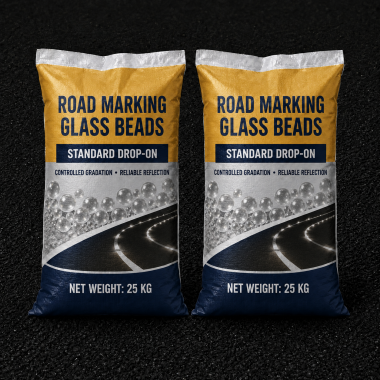
Packaging: 25 kg/bag
The technical values above are based on the supplied sample test report. Final specifications should be confirmed in the quotation, technical data sheet or approved sample before ordering.
📦 Packaging and Storage
The standard export package is a sealed 25 kg laminated woven bag.
Store the product in a cool, dry and ventilated warehouse. Keep bags sealed until use and protect them from rain, moisture, direct sunlight and contamination.
Do not place bags directly on wet ground. Palletized storage is recommended for export shipments and long-term warehouse handling.
✅ Quality Control
Production and batch inspection can include:
Visual appearance
Particle size distribution
Roundness
Density
Refractive index
Magnetic particle content
Moisture resistance
Surface coating performance
Heavy-metal content
Packaging integrity
Customized particle size distributions and surface treatments can be discussed according to the customer’s road marking material, application equipment and project specification.
❓ Frequently Asked Questions
Can these glass beads be used with thermoplastic road marking paint?
Yes. They can be applied to the surface of freshly laid thermoplastic markings before the material cools and hardens.
Can they be used with acrylic or water-based traffic paint?
Yes, provided that the beads are applied while the paint surface is still wet enough to achieve proper embedding and adhesion.
Are these intermix glass beads?
No. This product is positioned as a standard drop-on grade for surface application. Dedicated intermix grades should be selected according to the marking formulation and production process.
Do the beads comply with EN 1423 or AASHTO M247?
The currently available test report is based on GB/T 24722-2020. Compliance with EN 1423, AASHTO M247 or another international specification should only be stated after the corresponding gradation and test requirements have been separately confirmed.
Can the particle size distribution be customized?
Yes. Alternative gradations, roundness levels and surface treatments can be discussed according to order quantity and project requirements.
📩 Request a Technical Recommendation
Please provide the road marking material type, wet-film thickness, construction equipment, required standard, destination market and target retroreflectivity.
We can then recommend a suitable glass bead gradation, surface treatment, packaging method and application range for your project.
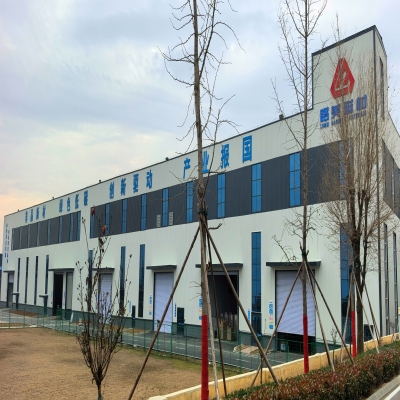
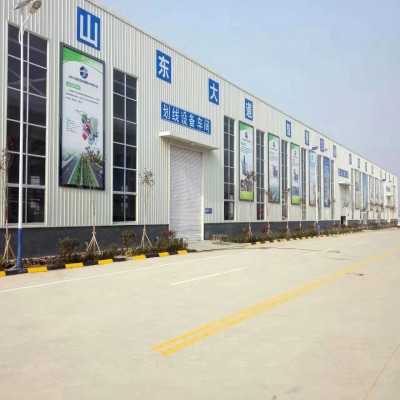
Our factory

LUMEI Road Marking···
LUMEI Road Marking···
LUMEI Road Marking···

LUMEI Factory and ···
Hot Tags: