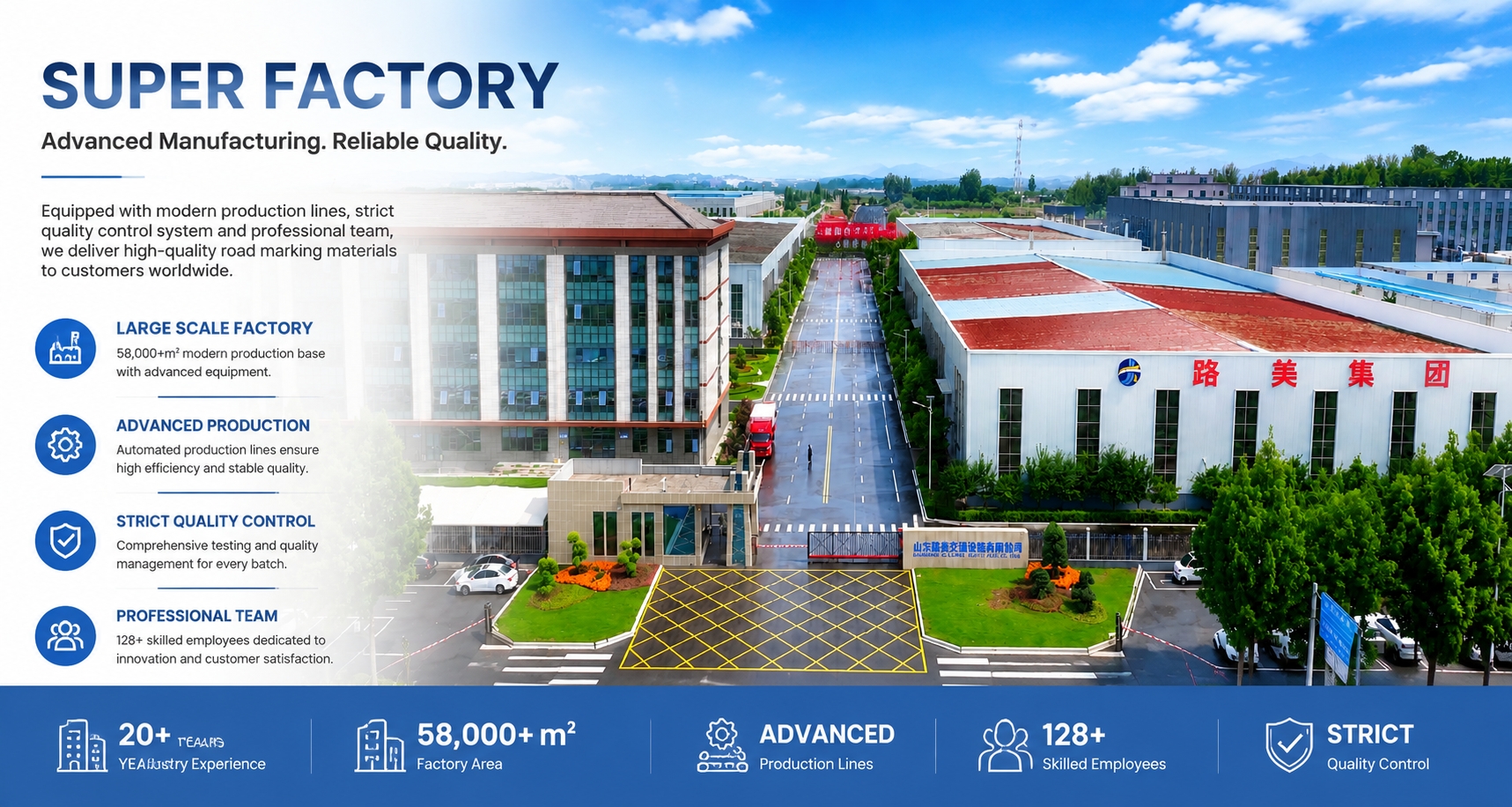
From Approved Specifications to Bulk Production
Shandong Lumei Traffic Facilities Co., Ltd. supports customized thermoplastic road marking paint orders by coordinating product specifications, material preparation, batching, mixing and packaging.
The production workshop connects laboratory development with bulk manufacturing. For importers, distributors and private-label buyers, the key requirement is a clearly documented product specification that can guide production and subsequent inspection.
Our thermoplastic road marking paint range provides a starting point for discussing standard products and the feasibility of customized requirements.
Confirming the Scope of Customization
Customization should begin with the intended application and project requirements. Depending on technical feasibility and the agreed order, discussion may cover:
White, yellow or other requested colors.
Intermix glass bead content and related material requirements.
Application characteristics for the selected marking equipment.
Performance criteria and specified test methods.
Bag weight, label information and private-label packaging.
These requirements need to be reviewed together. Adjusting one ingredient or property may affect other characteristics, so a proposed formulation should be evaluated before bulk production.
For raised thermoplastic road markings, the material specification also needs to reflect the intended marking profile and forming process.
Controlled Batching and Mixing
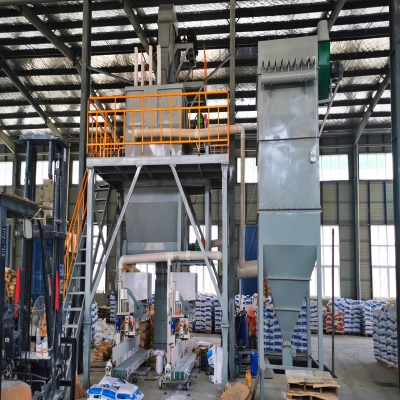
Production follows the confirmed formulation and applicable operating instructions. Identifying the required raw materials, controlling batch quantities and managing the mixing process help translate the approved specification into a manufacturing order.
Thermoplastic paint is supplied as a solid material for melting during application. Factory production procedures should therefore be described according to the actual equipment and process, rather than assumed to include the same high-temperature melting operation used on site.
Dust collection equipment supports the management of dust at relevant handling and production points. Its presence alone does not establish compliance with every destination-market environmental requirement.
Production Checks and Finished Product Sampling
Process monitoring and finished product testing have different roles. Equipment settings and weighing checks help control manufacturing, while sampled product evaluation provides information about selected properties of the completed batch.
The inspection scope should match the agreed specification and available test methods. Production sensors should not be treated as a substitute for laboratory evaluation of properties such as wear resistance or weathering performance.
Relevant records may include the batch number, production date, formulation reference and inspection results. These records support order identification and the review of quality feedback.
Packaging for Private-Label and Export Orders
Packaging should be confirmed before production, including bag weight, packaging material, artwork and the required product information. Buyers requesting their own brand should approve the label layout and identify any destination-specific labeling requirements.
Pallet arrangement and shipment preparation should consider cargo weight, package protection and handling conditions. Customized packaging quantities and production lead times depend on the actual order and should be confirmed during quotation.
For a consistent comparison of offers, see our guide on comparing road marking paint quotations.
Discuss Your Custom Production Requirements
Contact LUMEI with your technical specification, requested color, expected quantity and packaging requirements. Our team can discuss sample confirmation, customization feasibility and the proposed production and inspection arrangements before bulk ordering.