Qingdao Agricultural University Students Visit LUMEI Road Marking Paint Factory
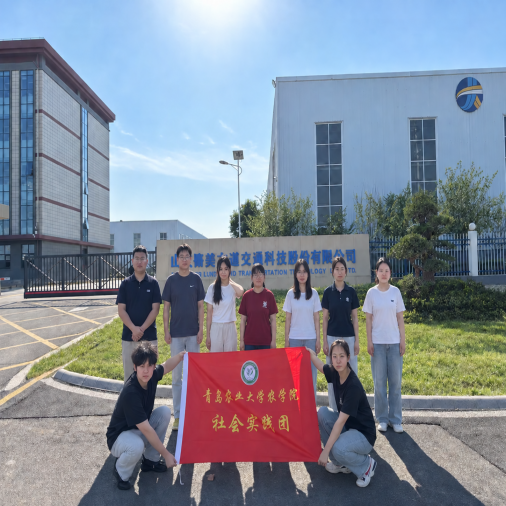
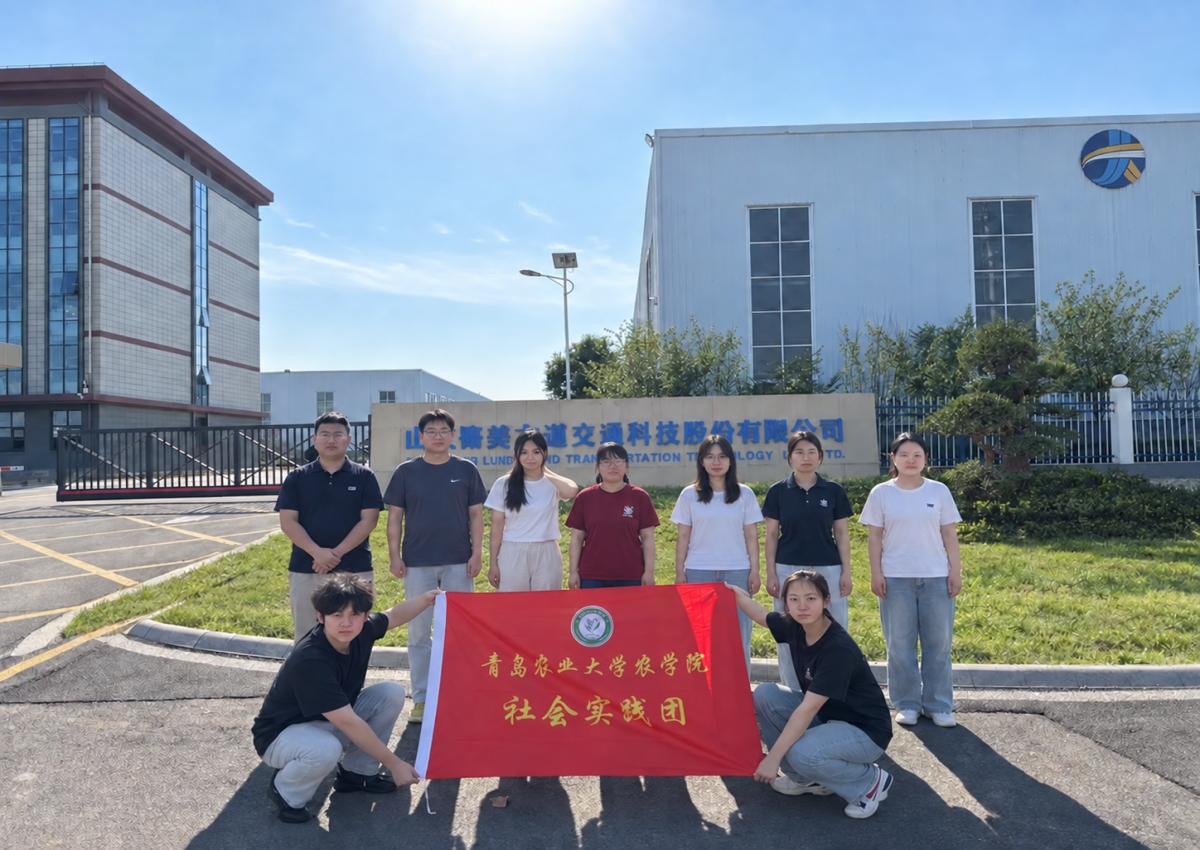
On September 21, a social practice team from the College of Agronomy at Qingdao Agricultural University visited the production base of Shandong LUMEI Traffic Facilities Co., Ltd. in Pingyi County, Linyi City, Shandong Province.
The visit was organised to help students better understand the development of modern industrial chains and connect classroom knowledge with real manufacturing practices.
During the visit, the students learned about road marking paint production, automated manufacturing equipment, product quality control and the role of road traffic materials in modern infrastructure construction.
Introduction to LUMEI Road Marking Materials
The visiting team was welcomed by representatives of LUMEI, who introduced the company’s development, product range and manufacturing capabilities.
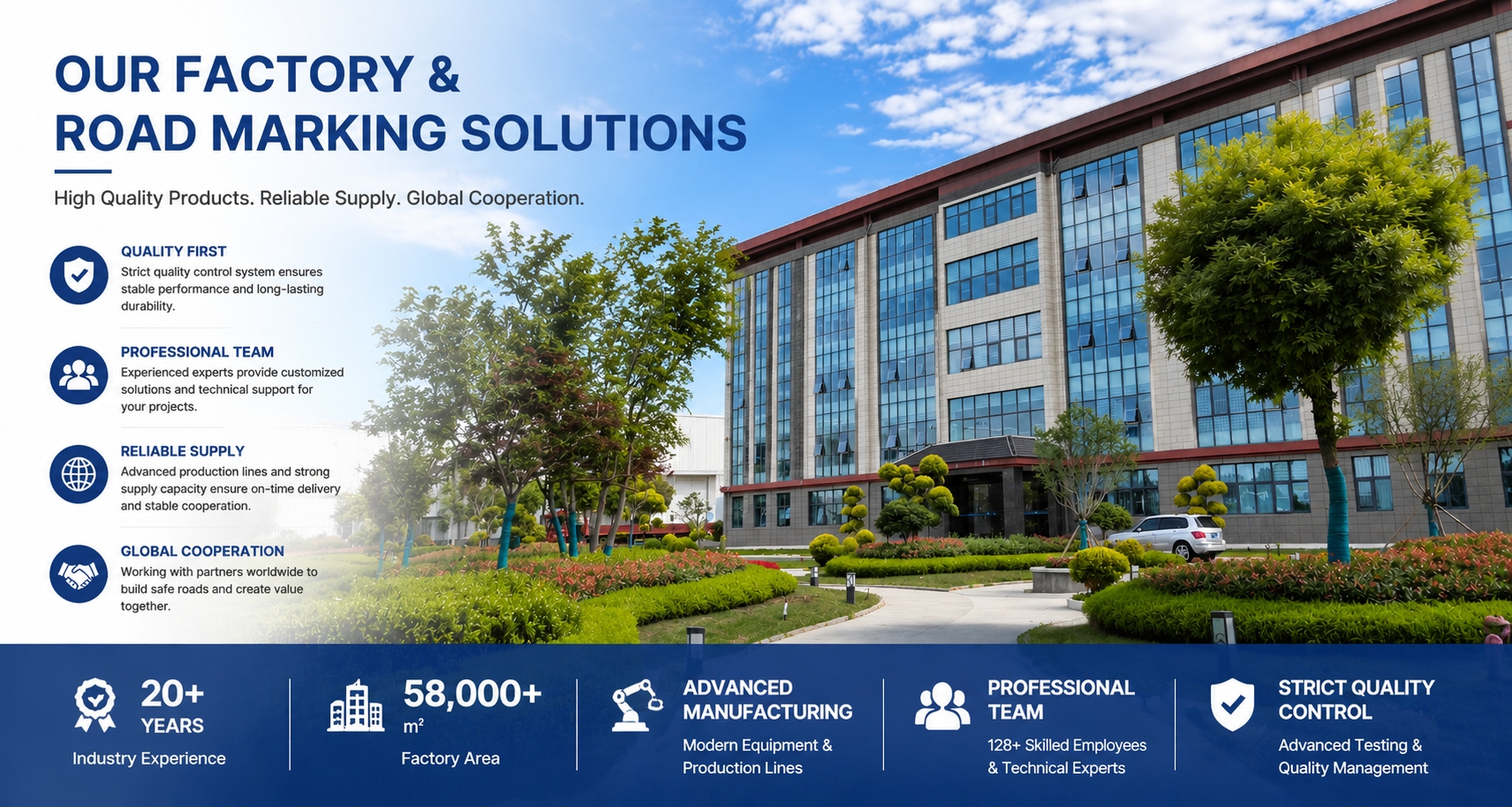
Shandong LUMEI Traffic Facilities Co., Ltd. specialises in the research, production and supply of road marking materials and traffic safety products.
The company’s main products include:
Thermoplastic road marking paint
Cold-applied road marking paint
Water-based road marking paint
Two-component MMA road marking materials
Reflective glass beads
Road marking primer
Coloured anti-skid pavement materials
These products are widely used on highways, municipal roads, rural roads, industrial areas, parking facilities and other transportation infrastructure projects.
LUMEI has established a sales and service network combining domestic distribution with international trade. The company can also provide customised formulations, colours, technical specifications and OEM packaging according to different project requirements.
Visiting the Road Marking Paint Production Workshop
Accompanied by LUMEI’s technical and management team, the students entered the road marking paint production area to observe the manufacturing process.
Inside the workshop, production equipment operated in an organised manner. The students learned how raw materials are inspected, measured, mixed, processed, tested and packed before the finished products leave the factory.
The technical team explained that producing reliable road marking paint requires control at every stage of the manufacturing process.
Important production and quality-control procedures include:
Raw material inspection
Formula confirmation
Accurate material weighing
Controlled mixing and dispersion
Production-process monitoring
Finished-product sampling
Laboratory performance testing
Packaging and label inspection
Batch recording and traceability
Through close observation of the production process, the students gained a clearer understanding of how modern equipment and standardised management can improve manufacturing efficiency and product consistency.
Understanding Thermoplastic Road Marking Paint Production
Thermoplastic road marking paint is one of LUMEI’s main product categories.
It is normally supplied as a solid powder or granular mixture and must be heated before application. After being applied to the pavement, the material cools and forms a durable marking layer.
A typical thermoplastic formulation may contain petroleum resin, mineral fillers, pigments, waxes, performance additives and reflective glass beads.
During the factory visit, the technical team explained that thermoplastic paint formulations cannot be evaluated only by appearance or price. The formulation should be selected according to the project’s technical standard, climate, pavement type, traffic conditions, construction equipment and required reflective performance.
Different customers may have different requirements for:
Softening point
Density
Drying time
Wear resistance
Compressive strength
Colour performance
Heat resistance
Low-temperature resistance
Glass bead content
Flowability
Packaging and labelling
LUMEI can review customers’ technical specifications and adjust the formulation according to confirmed project requirements.
Road Marking Paint Quality Control
Quality control was another important part of the factory visit.
The students learned that road marking paint must perform reliably under different construction and service conditions. Raw material selection, formulation accuracy, production temperature, mixing uniformity and finished-product testing can all affect the final marking performance.
For thermoplastic road marking paint, commonly reviewed properties include:
Colour and appearance
Softening point
Density
Flowability
Drying time
Compressive strength
Wear resistance
Water resistance
Alkali resistance
Heat stability
Low-temperature performance
Premixed glass bead content
The test requirements may vary between countries and projects. For this reason, buyers are encouraged to provide the applicable standard, tender document or required test values before production.
This allows the manufacturer to determine whether a standard product is suitable or whether a customised formulation is required.
Reflective Glass Beads and Nighttime Visibility
The visiting students also learned about the role of reflective glass beads in road marking systems.
Premixed glass beads can be incorporated into thermoplastic road marking paint during production. Drop-on glass beads are spread onto the hot marking surface during construction.
When vehicle headlights reach the glass beads, part of the light is reflected toward the driver, helping improve the nighttime visibility of road markings.
The performance of reflective glass beads can be affected by:
Particle-size distribution
Refractive index
Roundness
Surface treatment
Application rate
Embedment depth
Compatibility with the marking material
Road marking paint and reflective glass beads should therefore be selected as a complete system rather than as unrelated products.
Connecting Industrial Manufacturing with Rural Infrastructure
The visit also helped the students understand the connection between industrial manufacturing and agricultural development.
Road transportation infrastructure plays an important role in connecting rural communities, agricultural production areas, logistics centres and urban markets.
Clear and durable road markings can help improve traffic organisation and road safety on rural roads, agricultural park roads and logistics routes.
By visiting a road marking material manufacturer, the students gained practical insight into how material technology and industrial production support transportation infrastructure and rural development.
Combining Education with Manufacturing Practice
This factory visit provided the students with an opportunity to move beyond classroom learning and observe a real industrial production environment.
Through discussions with LUMEI’s management and technical personnel, the students developed a better understanding of manufacturing processes, product quality, industrial management and market requirements.
The visit also demonstrated the value of cooperation between universities and manufacturing enterprises.
Factory visits, practical education and technical exchanges can help students understand how theoretical knowledge is applied in real production and infrastructure projects.
LUMEI’s Commitment to Road Marking Material Production
LUMEI remains committed to the research, production and supply of road marking materials.
The company provides:
Thermoplastic road marking paint
Cold-applied acrylic road marking paint
Water-based road marking paint
Two-component MMA materials
Reflective glass beads
Road primer
Coloured anti-skid pavement materials
Customised formulation services
OEM and private-label packaging
Technical data and application guidance
LUMEI welcomes customers, contractors, distributors and industry partners to visit the factory and learn more about its products, production processes and quality-control system.
For product recommendations or project quotations, customers can send their technical specifications, required colours, pavement information, application method and packaging requirements to the LUMEI team.
Conclusion
The visit by the social practice team from Qingdao Agricultural University provided students with direct exposure to modern road marking material production.
By observing the manufacturing workshop and communicating with the company’s technical team, the students gained a practical understanding of automated production, product testing, quality management and the importance of transportation materials in infrastructure development.
LUMEI will continue improving its manufacturing capabilities, product quality and technical services while supporting road construction and transportation safety projects in China and international markets.