260 Tons Two-Component Road Marking Paint Bulk Procurement Supply Case
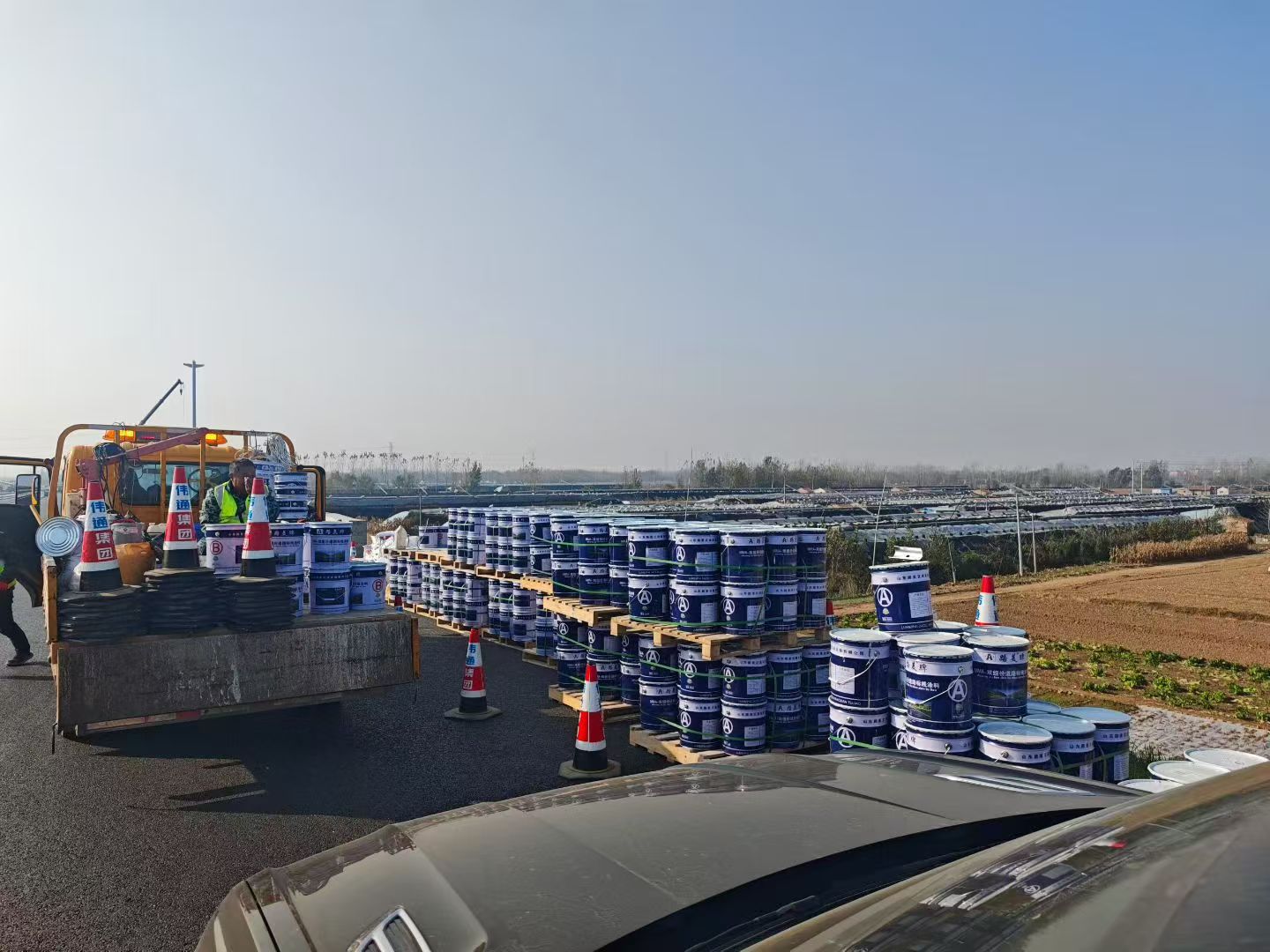
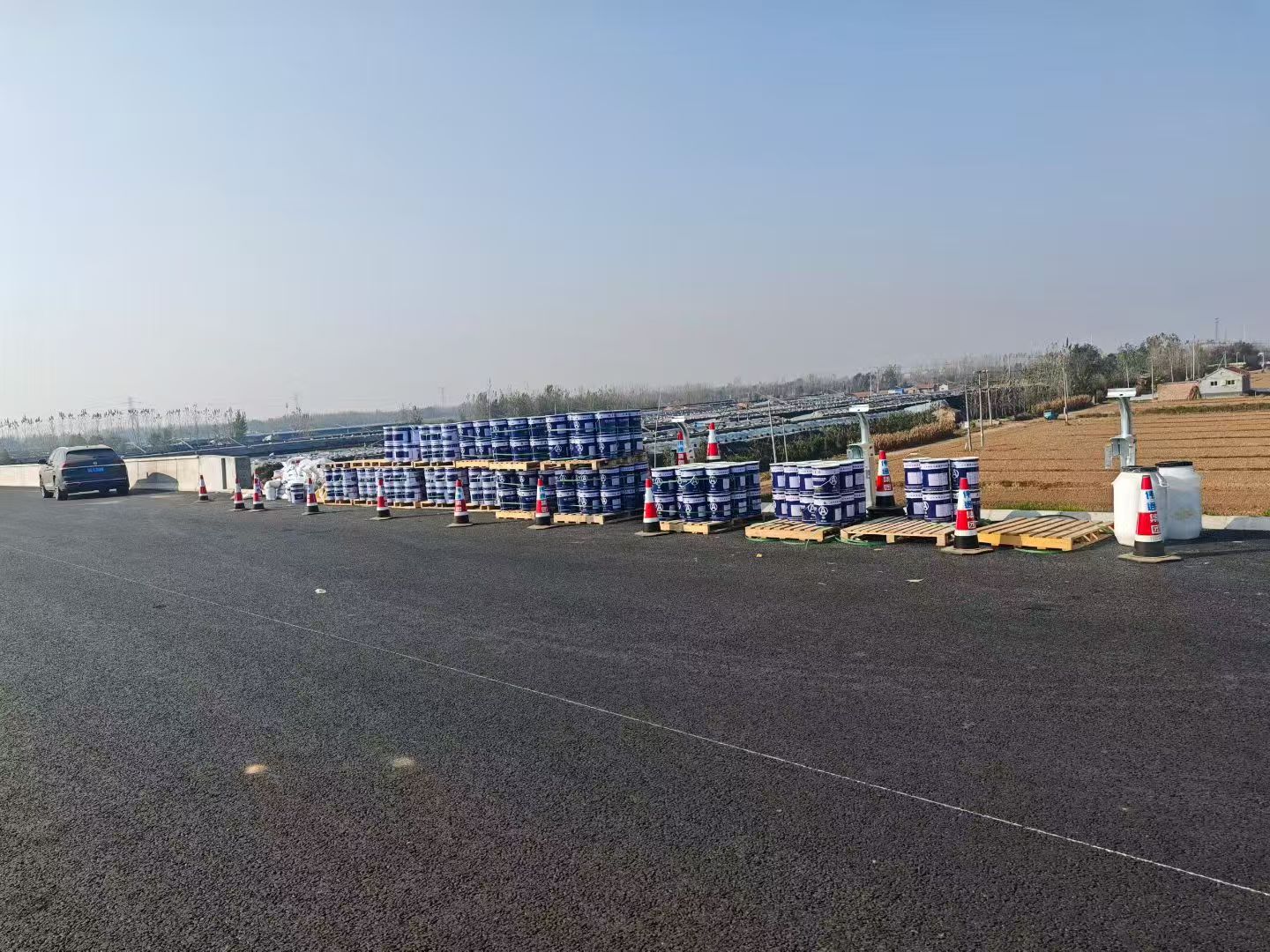
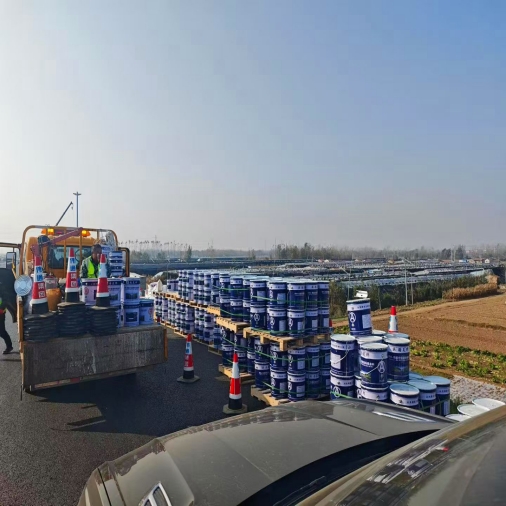
This on-site photo records the finished stacking and vehicle loading scene of the 260-ton two-component cold plastic road marking paint procurement project. Different from our mainstream non-hazardous thermoplastic paint and colored ceramic particles, two-component liquid marking coating belongs to dangerous goods, requiring special DG certification, appraisal and declaration procedures for cross-border sea transportation. This case shows our complete supporting capacity for liquid hazardous coating orders, serving as a supplementary supply option for trade customers who have overseas demand for two-component products while we still prioritize low-risk solid non-hazardous product bulk export business as core profit direction.
1. Project Procurement Background & Customer Demand
This 260-ton two-component marking paint order is placed by a domestic foreign trade service enterprise, who receives a matched demand from an overseas regional engineering and import trader. The overseas end client has local project construction specifications that mandate two-component cold plastic coating for partial pavement sections, so the trade partner entrusts us to produce and supply qualified liquid two-pack paint with full set dangerous goods export documents.
We clearly distinguish market positioning for different product lines: solid thermoplastic paint, vibration marking paint and colored ceramic particles remain our primary push items for mass bulk export, as they are non-hazardous general cargo with simple customs clearance, low logistics cost and stable repeat order profit. Two-component liquid coating is only supplied as a supplementary customized service for trade customers with explicit overseas DG-compliant order demands, since its export process brings extra operation costs, inspection cycles and shipment risk compared with solid products.
The whole 260-ton goods adopt standard 20L iron barrel sealed packaging, with main paint and curing agent separately packed according to fixed mixing ratio. All raw materials use benzene-free low VOC formula to meet both domestic production safety standards and overseas environmental inspection thresholds. Before formal mass production, we completed third-party dangerous goods transportation appraisal, MSDS hazard classification filing and batch performance testing to ensure every document meets international port DG declaration requirements.
2. Standardized Production, Packaging & Delivery Loading Workflow
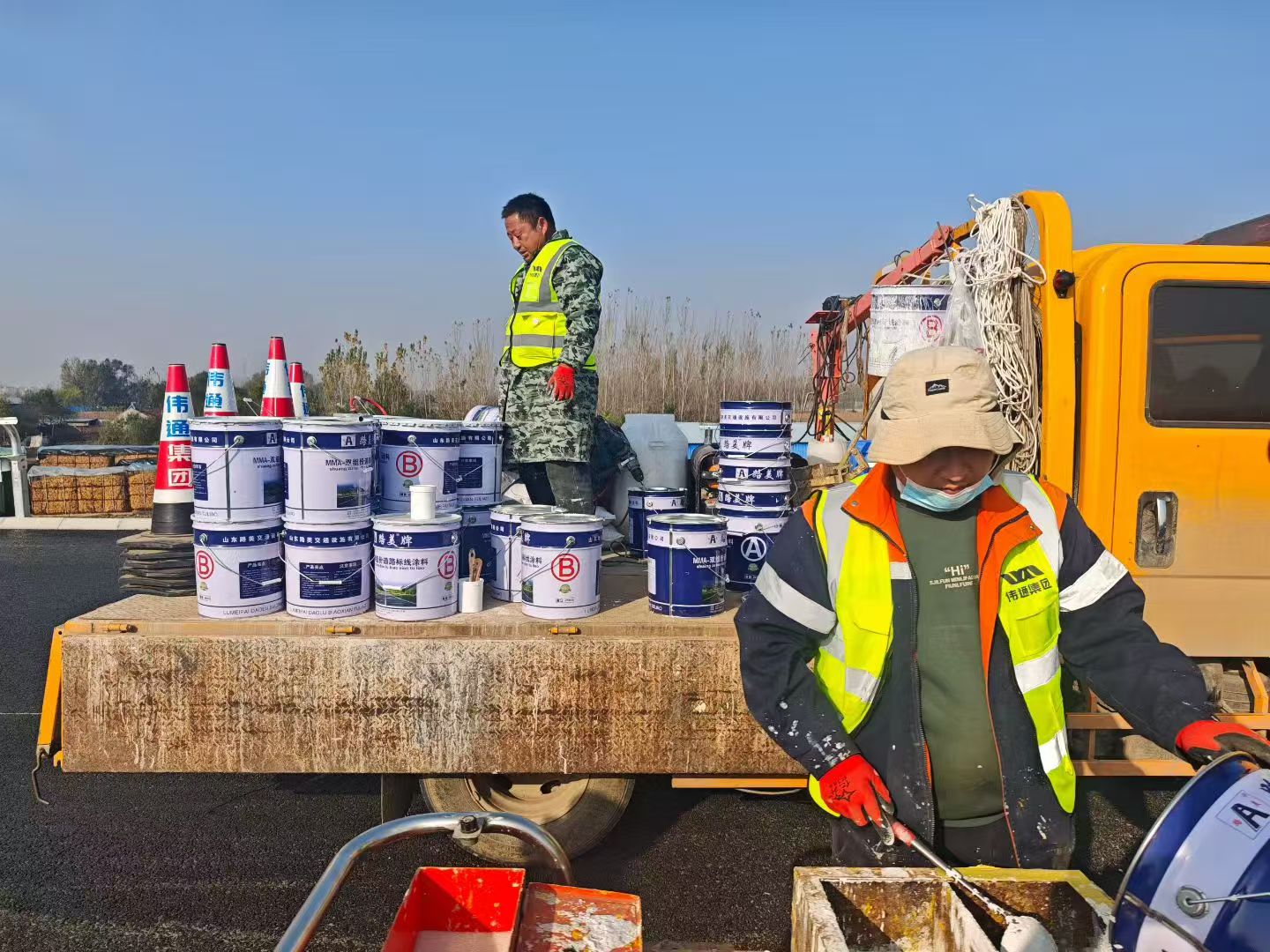
The picture displays palletized barrel stacking and delivery vehicle loading before outbound transportation. Strict standardized control is implemented for hazardous liquid coating orders to avoid leakage, extrusion damage and document mismatch risks:
2.1 Sealed anti-leakage export packaging specification
Each 20L iron barrel is equipped with thickened sealing gaskets and anti-theft screw caps; outer barrels are printed with hazard class labels, UN transport codes and ingredient hazard reminders complying with international DG shipping standards. Barrels are fixed firmly on wooden pallets with binding straps, and gap buffer pads are added between stacked barrel layers to prevent collision leakage during truck transit and sea container vibration.
2.2 Batch-by-batch performance & hazard inspection
QC teams conduct full sampling inspection on each production batch: test curing speed, pavement bonding strength, UV weather resistance and reverse reflection value to match overseas project acceptance standards. Synchronously, we sort out dangerous goods transport appraisal reports, UN packaging qualification certificates, batch safety data sheets and factory inspection files for every pallet of goods, ensuring documents and physical cargo information are fully consistent for customs clearance audit.
2.3 Segregated loading & transportation risk control
For domestic delivery to port warehouse and subsequent container stuffing, we require independent DG designated containers for two-component liquid paint, prohibiting mixed loading with solid thermoplastic goods in the same shipping container to comply with international dangerous goods stowage rules. Our logistics coordination team tracks whole-process transit temperature and shock protection, reminding freight forwarders to arrange professional DG declaration agents in advance to shorten port inspection waiting time.
2.4 Customized document matching for trade customers
For the cooperative domestic foreign trade company, we provide one-stop document sorting service exclusive to hazardous orders: pre-fill declaration data templates, coordinate third-party testing institutions for supplementary certification if destination ports have special filing rules, and hand over hard copy and scanned full document sets before container shipment, reducing the trade team’s extra communication work with customs brokers.
3. Differentiated Cooperation Value For Domestic Foreign Trade Companies & SOHO
This two-component paint project clarifies a clear dual-product supply strategy for your foreign trade operation, bringing layered profit and risk control advantages:
Solid non-hazardous products as core long-term bulk profit carrier
Thermoplastic paint, vibration coating and colored ceramic particles still retain absolute priority for your main market expansion. They have zero DG operation trouble, abundant general container space, transparent low logistics cost and stable annual repeat bulk orders, perfectly fitting the light asset operation model of SOHO and medium-sized trading firms without professional dangerous goods operation teams. Over 80% of our annual export volume comes from these low-risk solid product lines, delivering steady, low-hassle profit for trade partners.
Two-component liquid paint as supplementary customized order support
When your long-term overseas importer or engineering client has mandatory two-component coating demand, we act as reliable backup supplier with complete DG certification capacity. You do not need to source separate liquid paint factories or coordinate multiple testing agencies; we integrate production, packaging, hazard appraisal and document issuance in one service, helping you lock full-set project supply contracts without rejecting client matching liquid coating demands. Note that liquid orders carry slightly higher operation costs and longer delivery cycles, suitable only for confirmed high-margin customized project batches instead of large-scale stock wholesale.
One factory one-stop full product portfolio reduces your multi-supplier coordination cost
Instead of cooperating with separate factories for solid and liquid marking materials, you can source all road safety products from our single production base. Whether the overseas client needs full-container thermoplastic bulk stock, small mixed ceramic particle replenishment or medium-tonnage two-component project paint, we unify production scheduling, quality control and export document output, saving your time and communication cost of managing multiple upstream manufacturers.
4. Post-Delivery Order Follow-Up & Long-Term Cooperation Rules
After finishing full loading and outbound delivery of this 260-ton two-component project, we transmitted all DG document scans, loading photos, pallet packing lists and product technical parameter sheets to the domestic foreign trade partner immediately. Our document team keeps standby for real-time consultation to resolve any customs declaration data questions during port clearance.
We have reached a clear long-term cooperation agreement on liquid hazardous coating orders: two-component paint will only be produced for confirmed signed orders with complete destination port DG filing requirements, no large-volume stock production to avoid inventory hazard storage risks. Meanwhile, we offer tiered pricing: larger tonnage two-component orders get discounted ex-factory unit prices, to offset part of the client’s extra DG logistics and declaration expense pressure.
For future mixed demand orders, we recommend clients split shipments: solid non-hazardous thermoplastic and ceramic particles fill standard general containers for fast low-cost sea freight, while two-component liquid paint is shipped in separate DG containers to balance total project logistics expenditure and delivery efficiency.
Conclusion
The 260 tons two-component road marking paint bulk procurement supply case demonstrates our comprehensive production and export service capacity covering both non-hazardous solid marking materials and DG-compliant liquid cold applied coatings. For domestic foreign trade enterprises and individual SOHO practitioners, adopting a dual product operation strategy—prioritizing high-volume low-risk solid thermoplastic and ceramic particle wholesale, and taking two-component liquid paint as supplementary customized project supply—can maximize market coverage while controlling cross-border shipment risks. We maintain flexible order acceptance for both product series, providing stable, document-backed supply support for all trade partners expanding global road marking material import client resources.